Copyright © Kaloop 2025 All Right Reserved
What Is CMCA—and Why It Matters for Your Florida Community Association


Table of Contents
- Introduction
- What Is a CMCA?
- Why It Matters for Your Florida Community Association

- How to Leverage CMCA in Your Board’s Decision-Making
- Final Thought
When it comes to managing a condominium or homeowners association (HOA), not every manager brings the same level of training, accountability, or credibility. One major credential that sets distinguished managers apart is the CMCA—Certified Manager of Community Associations. For Florida community associations, understanding this credential can make a big difference in governance, legal compliance, and resident satisfaction.
What Is a CMCA?
The CMCA, issued by the Community Association Managers International Certification Board (CAMICB), is the only international certification designed solely for managers of condominium, homeowner, and cooperative associations.
To become CMCA-certified, candidates must meet one of several prerequisites: completing a CAMICB‑approved education course in community association management; or having at least two years of experience as a community association manager; or holding an active state‑recognized CAM credential (such as Florida’s CAM license). Then they must pass the CMCA exam and follow a code of ethics. Recertification every two years, with continuing education, keeps their skills current.
Why It Matters for Your Florida Community Association
1. Stronger Governance & Financial Planning
A CMCA‑certified manager is trained in areas such as budgeting, reserve studies, contract management, risk assessment, and governance. That means better oversight of association finances, more reliable planning, and accountability to homeowners.
2. Legal Compliance & Risk Management
Florida has many laws and regulations affecting community associations—from statutes on records, meetings, assessments, to safety codes. A manager with the CMCA credential is more likely to understand and comply with these requirements, reducing exposure to legal issues.
3. Professional Communication & Operations
CMCA holders must follow a professional code of conduct and maintain continuing education. This improves communication with boards and residents, enforces best practices, and leads to consistent, ethical operation of amenities, contracts, and meetings.
How to Leverage CMCA in Your Board’s Decision-Making
When hiring a community manager, include CMCA certification as a preferred or required credential in your RFPs.
Ask prospective managers for their CMCA exam results / certificate, proof of prerequisite education or experience, and evidence of continuing education.
Ensure contracts with property management firms stipulate ethical standards, compliance responsibilities, and professional development—both parties benefit when expectations are clear.
Final Thought
In an industry where anyone can manage, CMCA certification distinguishes the serious professional from the merely adequate. For Florida community associations, hiring (or supporting) CMCA‑certified managers isn’t just a nice to have—it’s a strategic move. It improves compliance, enhances risk management, and supports the overall quality and value of your community. respect. Together, these efforts build healthier, cleaner, and more connected community environments.
Popular in the Community
Understanding Today’s Housing Market: Trends and Insights for Homeowners
Written by Heidi Hensell
December 26, 2025
Table of Contents
- Introduction
- 1. Market Shift: From Frantic to Balanced
- 2. Interest Rates & Affordability
- 3. Rising Inventory Levels
- 4. Price Trends & Regional Variation
- 5. Technology Driving Market Engagement
- 6. Long-Term Stability & Equity Building
The housing market remains a cornerstone of the U.S. economy, influencing personal finances, community development, and investment strategies. For homeowners, buyers, and real estate professionals, staying informed on current market dynamics is crucial for making smart decisions.
1. Market Shift: From Frantic to Balanced
The recently overheated housing market is showing signs of cooling. Demand remains high in desirable areas, but rising mortgage rates have slowed price appreciation and buyer activity. Well-maintained and fairly priced homes continue to sell quickly, while overstretched listings linger longer—highlighting the need for realistic pricing and targeted marketing.
2. Interest Rates & Affordability
Mortgage rates currently hover around mid‑6%—still elevated, yet slightly improved from recent peaks. Any rate reductions could enhance buyer purchasing power, but affordability remains tight, especially in high-cost regions.
3. Rising Inventory Levels
Housing supply is growing. National inventory rose by approximately 24.8% year-over-year in July—marking over 21 consecutive months of inventory growth. While still below pre-pandemic norms, these gains are giving buyers more options and transforming many markets from seller- to buyer-favored.
4. Price Trends & Regional Variation
National home price growth is modest. The median price rose just 0.2% year-over-year to around $422,400 in July, with half of the country experiencing declining prices. Florida, once a red-hot market, is now among the coldest in the nation, driven by rising insurance premiums and weakened buyer demand.
5. Technology Driving Market Engagement
Technology continues to reshape real estate. Virtual tours, mobile listings, AI-powered tools, and online communications help homebuyers and sellers engage efficiently. For homeowners, understanding these platforms and leveraging them strategically can make a meaningful difference.
6. Long-Term Stability & Equity Building
Despite short-term fluctuations, real estate remains a reliable long-term wealth builder. As of early 2025, homeowners collectively held over $35 trillion in home equity. Focusing on maintenance and smart financial planning drive sustainable value over time.
Popular in the Community
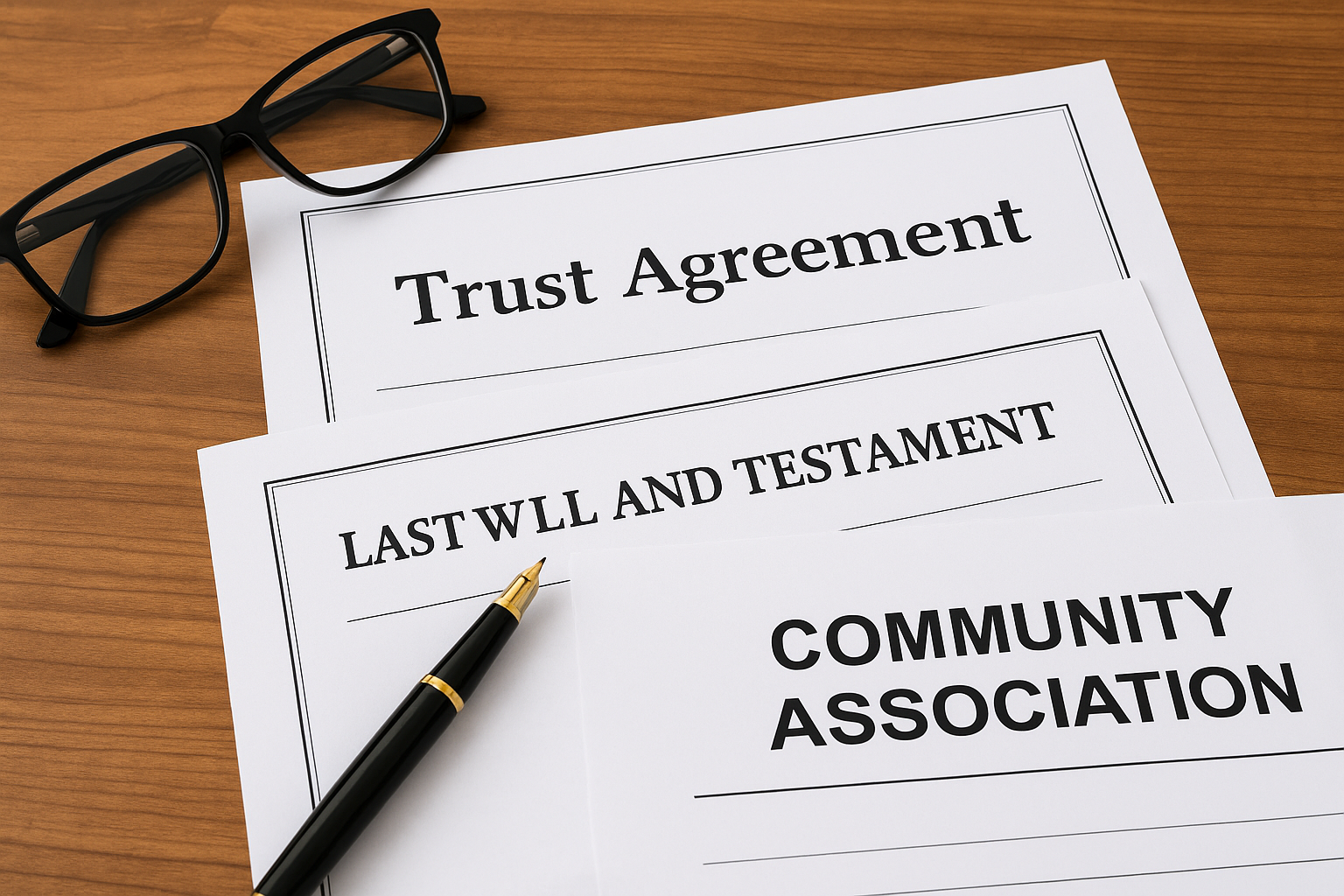
Trusts, Wills, and Community Associations in Florida: What Boards Need to Know
Written by Heidi Hensell
December 24, 2025
Table of Contents
- Introduction
- Who Owns the Unit?
- Key Considerations for Associations
- Florida‑Specific Legal Tips
- Best Practices for Boards
- Final Thoughts
In Florida’s condominium and homeowners’ associations, many properties are held in trusts or are part of an estate—especially in retirement or vacation communities. For association boards and community managers, knowing how trusts and wills interact with association governance is essential to ensure smooth operations, legal compliance, and respect for resident rights.
Who Owns the Unit?
When property is held in a trust, the trustee is the legal owner. That means the trustee has the right to vote in association matters, receive all official communications, and pay assessments. If the owner dies and their property goes through probate, the personal representative of the estate may temporarily have those legal powers until the title is transferred. Boards should verify documentation such as trust certificates, death certificates, or letters of administration to confirm who holds legal title at any time.
Key Considerations for Associations
Voting Rights & Meetings
Boards must verify who is entitled to vote or speak at meetings. If a trustee holds the property, the association should ensure that trust documents are on file, and that the trustee is properly designated. If probate is involved, the personal representative may need to be recognized temporarily. Without clear documents, disputes can arise.
Delinquent Accounts & Assessments
The obligation to pay assessments doesn’t disappear just because the owner is deceased, or the unit is in a trust. The association can pursue assessments and may place liens—even during probate or while the trust is in effect—depending on the governing documents. Clear policies and record‑keeping help avoid confusion when payments are missed.
Transfer of Ownership
When ownership transfers—whether from a trust or the estate—to a new owner, the association’s usual rules for application, screening, and documentation must be followed. That includes updating the association’s owner records, mailing address, contact info, voting registration, and collection of any applicable fees or dues associated with the transfer.
Florida‑Specific Legal Tips
- Official Records Requirement: Under Florida Statutes § 720.303 (for HOAs) and § 718.111 (for condominium associations), associations are required to maintain accurate and current records of owners, including trustees or legal representatives.
- Notification Rules: Associations must send notices (e.g., meeting notices, assessment notices) to the rightful party of record. If ownership has changed because of a will or trust, that must be reflected in the association’s records to ensure proper legal notice.
- Probate & Estates: If property is in an estate, the personal representative may temporarily step in, but formal title transfer is needed for long‑term control and consistent communications.
Best Practices for Boards
Require new owners (including trust beneficiaries) to provide legal documentation (trust certificates, letters of administration, death certificates) so the association has clear ownership records.
Establish written rules for verifying who can vote, who receives notices, and who pays assessments in trust/estate situations.
Keep governing documents (CC&Rs, bylaws, declarations) updated and reviewed by legal counsel to clarify ownership and fiduciary responsibility.
Maintain clear communication with owners who hold property via trust or are involved in probates, so they understand their rights and responsibilities.
Ensure insurance and liability policies are consistent—if damage or legal issues arise, knowing who the legal owner is makes a difference in responsibility.
Final Thoughts
Trusts and wills may add legal complexity, but with clear procedures, diligent record‑keeping, and legal understanding, community associations in Florida can navigate these situations confidently. Ensuring that the association knows who owns a property, who can vote, and who pays assessments protects the association’s interests and respects the rights of current and future owners.
Popular in the Community
Insulation vs. Asbestos: What Homeowners and Associations Need to Know

Written by Heidi Hensell
December 23, 2025
Table of Contents
- Introduction
- What Is Asbestos—and Why Is It Dangerous?
- Modern Insulation: Safe and Efficient
- How to Tell If Asbestos Is Present
- Insulation Upgrades Done Safely
- Legal and Community Considerations
- Conclusion
Insulation is a vital part of any building—it regulates indoor temperatures, reduces energy bills, and adds to comfort. But if your home or community buildings were built before the 1980s, there’s something you need to be aware of: asbestos. Once commonly used for insulation, asbestos is now known to pose severe health risks. For homeowners, HOAs, COAs, and community managers, understanding the difference between safe insulation and asbestos-containing materials is essential.
What Is Asbestos—and Why Is It Dangerous?
Asbestos is a naturally occurring mineral that was widely used in insulation and construction materials until the late 1970s. It’s heat-resistant, durable, and once praised for its insulating properties. However, when asbestos fibers become airborne and inhaled, they can cause serious illnesses—including mesothelioma, lung cancer, and asbestosis. Today, asbestos use is heavily restricted, and any material containing it must be handled with extreme care.
Modern Insulation: Safe and Efficient
Fortunately, today’s insulation options are not only safe—they’re more effective. Materials like fiberglass, cellulose, mineral wool, and spray foam provide excellent thermal performance and noise reduction without the health risks of asbestos. Many of these are also environmentally friendly and help lower heating and cooling costs.
How to Tell If Asbestos Is Present
If your property was built before 1980, there’s a chance it could contain asbestos in insulation or other building materials like popcorn ceilings, old floor tiles, or pipe wrap. Unfortunately, asbestos fibers are microscopic—you can’t identify them by sight. The only reliable way to confirm the presence of asbestos is through professional testing. DIY kits are available, but EPA recommends hiring certified asbestos inspectors for accurate results and safe handling.
Handling Asbestos the Right Way
If asbestos is found, do not disturb it. In many cases, it’s safer to encapsulate the material rather than remove it. Disturbing asbestos without proper precautions can release fibers into the air. Only licensed asbestos abatement professionals should manage the removal or sealing of asbestos-containing materials. They follow strict safety protocols including containment, air monitoring, and disposal to protect all parties involved.
Insulation Upgrades Done Safely
If you’re planning a renovation or insulation upgrade, modern materials offer a safe and energy-efficient path forward. Fiberglass and mineral wool are popular choices, and spray foam can add air sealing benefits. Always confirm whether older materials need testing before removal. Making these upgrades not only improves comfort—it also increases property value.
Legal and Community Considerations
Associations are legally obligated to provide safe living conditions. Failing to properly inspect, report, or remediate asbestos risks can result in fines or lawsuits. Documenting inspections and updates, and working with EPA-certified professionals, ensures compliance and minimizes liability.
Conclusion
Insulation is essential, but it must be safe. For homeowners and associations, knowing the risks of asbestos and the benefits of modern insulation is key. With professional testing, informed upgrades, and proper handling, you can protect residents, meet legal obligations, and maintain your community’s value—safely and responsibly.
Popular in the Community
Seawalls and Community Associations in Florida: Your First Line of Coastal Defense
Written by Heidi Hensell
December 22, 2025
Table of Contents
- Introduction
- What Are Seawalls?
- Why Seawalls Matter for Associations
- Florida‑Specific Concerns
- Best Practices for Associations
- Conclusion
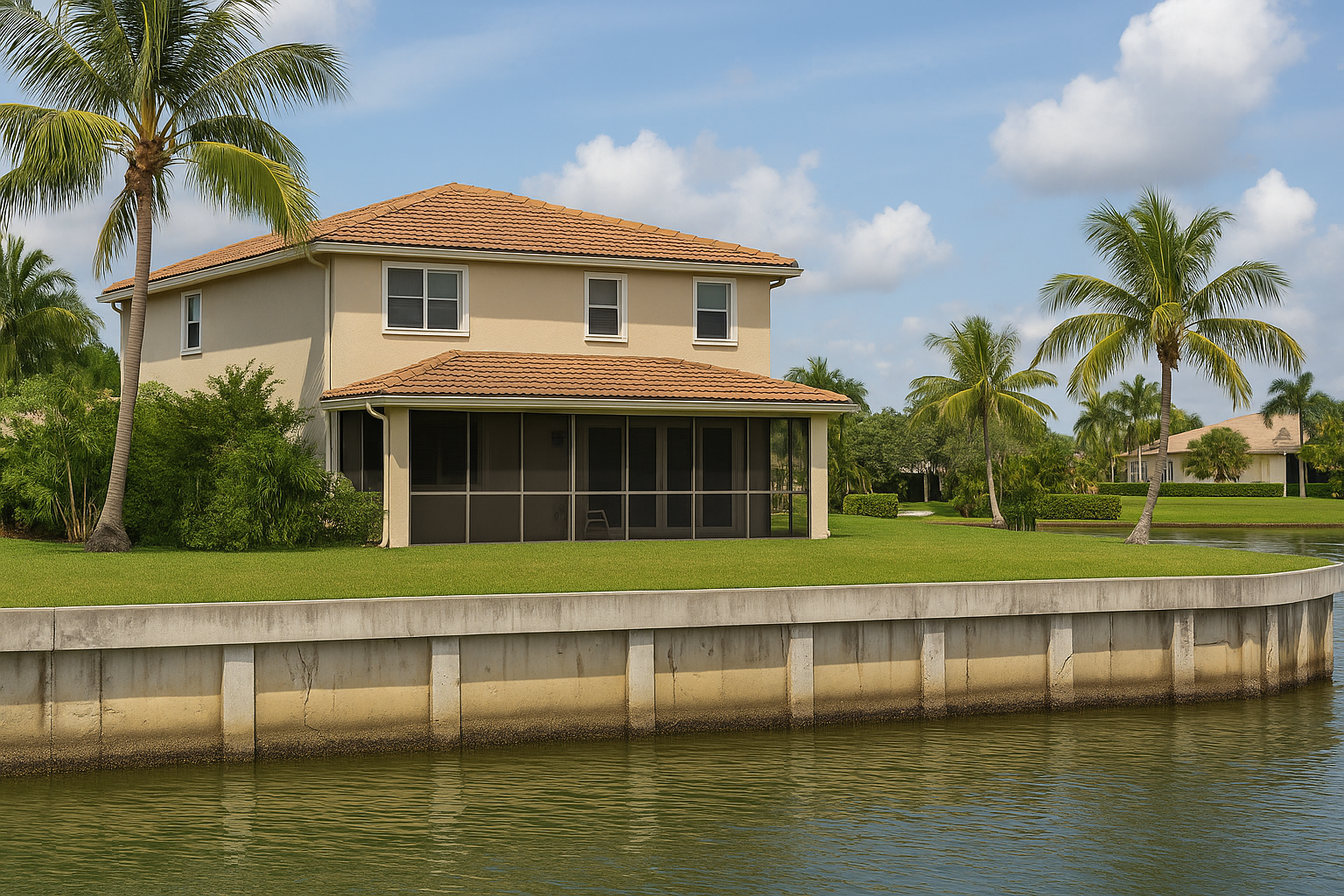
For Florida community associations located along the coast, canals, or intracoastal waterways, seawalls are much more than just structural features—they’re essential to protecting property, infrastructure, and resident safety.
What Are Seawalls?
Seawalls are engineered barriers built along shorelines to prevent land loss caused by erosion, storm surge, tides, and rising sea levels. In waterfront communities, they often define the boundary between common property and water. Depending on materials and environmental conditions, they can last decades. For example, concrete block seawalls in Florida typically have a service life of 30 to 50 years, provided they are well-built and properly maintained.
Why Seawalls Matter for Associations
Property Protection
A well-maintained seawall protects land, roads, utilities, and buildings from water intrusion, erosion, and storm damage. When seawalls fail, expensive damage and structural risks often follow.
Compliance & Permitting
Repairing or replacing seawalls requires navigating permits from local and state agencies (like Florida’s Department of Environmental Protection or regional water management districts). Associations must follow environmental regulations, protect submerged lands, and meet coastal construction control requirements.
Reserve Planning
Seawalls have limited lifespan—generally 30–50 years, sometimes more depending on materials, exposure, and maintenance. Associations should include seawall replacement or major repairs in their reserve studies to avoid surprise assessments and ensure funds are available when needed.
Insurance & Liability
If a seawall is damaged or fails, flooding, erosion, or structural damage can affect multiple homes. Associations may face legal liability if it’s found they neglected maintenance or delayed necessary repairs.
Florida‑Specific Concerns
Saltwater corrosion & storm exposure: Salt and water stress degrade materials, especially metal tie‑backs, concrete reinforcement, or older seawall panels.
Sea level rise & storm surge impacts: Higher water levels increase pressure on seawalls and accelerate erosion.
Signs of deterioration: Leaning walls, bulging panels, rusted or spalled concrete caps, sinkholes forming behind walls.
Material choices: Modern materials like vinyl, composite sheet piling, or corrosion‑resistant steel are often preferred for longevity and lower maintenance in harsh marine environments.
Best Practices for Associations
Routine Inspections: Conduct inspections at least annually and after major storms. Look for cracks, corrosion, bowing, and soil erosion behind the wall.
Maintenance & Repairs: Keep weep holes clear, seal cracks, maintain tie‑backs, and address minor damage before it escalates.
Permitting & Engineering: Work with licensed marine engineers and get required permits before repair or replacement.
Material & Design Selection: Opt for durable materials and designs suited to local conditions (wave energy, soil types, etc.).
Budget & Reserve Planning: Include seawall life, repair costs, and potential replacement in long‑term budgeting.
Final Thoughts
In Florida, seawalls aren’t optional—they’re a critical infrastructure component for waterfront communities. When associations treat seawalls as key assets—not just background landscaping—they protect property values, manage liability, and ensure long‑term safety and resilience. Proactive maintenance and planning today can save major costs tomorrow.
Popular in the Community
Laundry Systems and Community Associations in Florida: Clean, Convenient, and Compliant
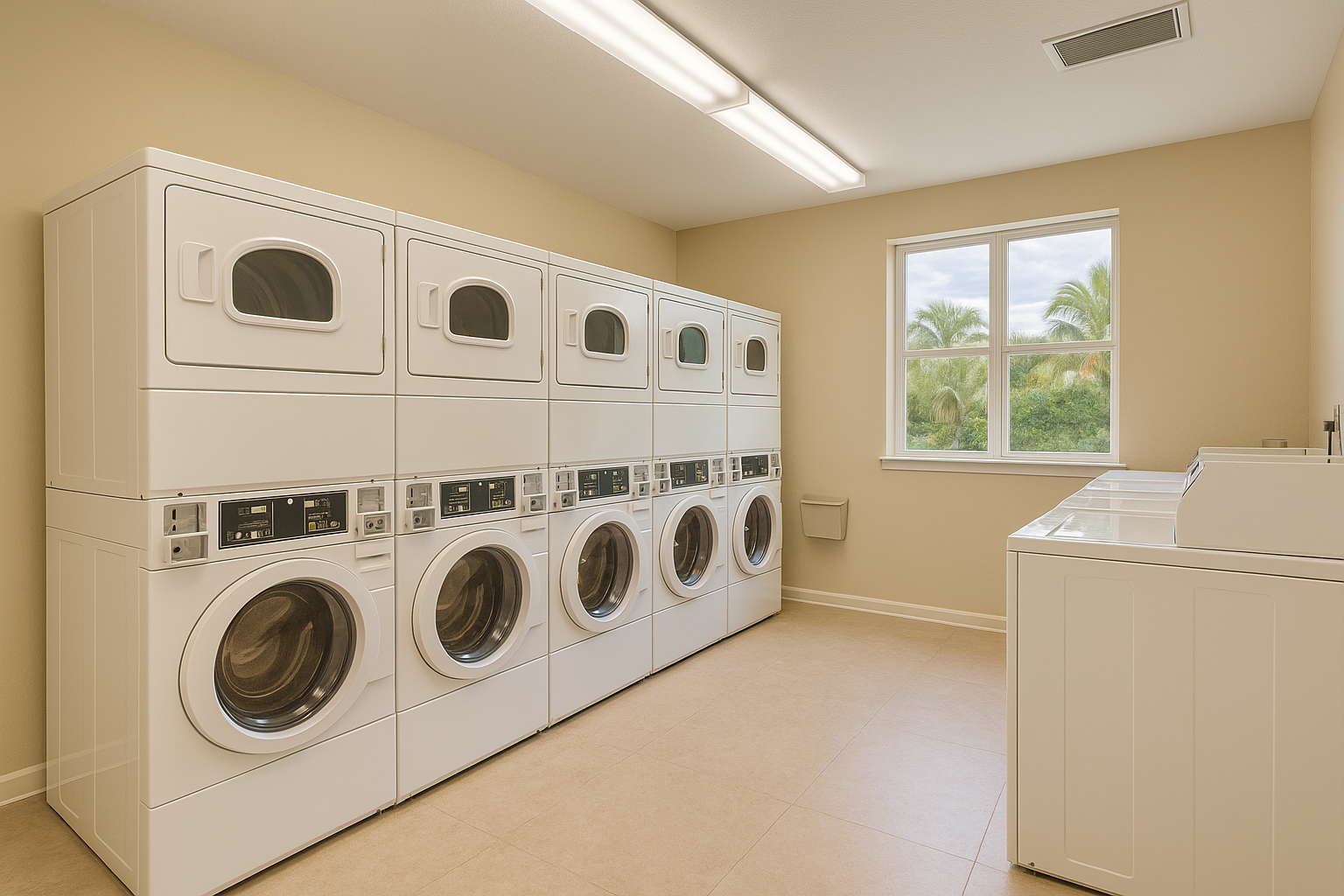
Table of Contents
- Introduction
- Key Considerations for Associations
- Florida‑Specific Tip
- Final Thoughts
Laundry systems might not be flashy, but in Florida’s multi‑unit communities—condominiums, HOAs, and co‑ops—they are vital for resident satisfaction, safety, and worry‑free operations. Done well, laundry systems offer convenience, value, and peace of mind; done poorly, they bring safety risks, high utility bills, and friction.
Key Considerations for Associations
1. Maintenance & Safety
Community laundry rooms and in‑unit laundry systems must receive regular maintenance. Pay attention to plumbing leaks, machine wear, and most importantly—dryer vents. Clogged dryer vents are a major fire hazard. Ensure vents are properly cleaned, maintained, and vented to the exterior. Also, in shared laundry rooms, waterproof flooring, safe electrical connections, and good ventilation are essential.
2. Water Use & Utility Costs
Older washers and dryers often consume much more water and energy. Associations should consider upgrading to high‑efficiency, Energy Star machines or explore third‑party service providers. Not only will this reduce utility costs, but also the environmental impact—especially important in Florida, where water conservation and sustainability are growing concerns.
3. Vendor Contracts
Many communities contract with laundry service providers who supply machines, collect revenue, and handle maintenance. These contracts should be carefully reviewed: look for transparency in revenue sharing, machine upkeep, responsiveness to repairs, and fair pricing. Pay attention to who handles what parts: service, parts, and liability for damage or malfunctions.
4. Accessibility & Fair Use
Laundry systems must comply with ADA requirements where applicable. This includes machine height, control accessibility, clear floor space in front of machines, routes to laundry rooms, and usability of payment systems. For example, the U.S. Access Board’s standards require clear floor/carpet space, reachable operable parts, and appropriate height limits for machine openings.
Set rules for fair usage—time limits, cleanliness expectations, and respectful scheduling—to prevent conflicts and ensure shared spaces serve everyone well.
5. Insurance & Liability
Laundry systems can cause significant exposure: water damage from leaks, fire risk from lint or vent issues, etc. Associations should ensure their insurance policies cover laundry‑related risks, especially water damage and fire. Also, make sure homeowners understand their responsibilities (e.g. in‑unit appliance maintenance, venting, etc.) to prevent gaps in coverage.
Florida‑Specific Tip
Florida’s high humidity and damp climate increase the risk of mold and mildew in laundry areas. To combat this, ensure laundry rooms—especially common ones—have excellent ventilation. Encourage regular inspections of dryer vents and machines, seal leaks promptly, and maintain clean, dry surroundings to prevent mold growth.
Final Thoughts
A well‑managed laundry system adds real value to a community—it boosts resident satisfaction, enhances safety, and helps control costs. But to reap benefits, associations must be proactive: maintain systems, choose high‑efficiency machines, ensure ADA compliance, and manage risk smartly. In Florida, moisture and climate add extra layers of concern, so staying on top of these systems is more than just maintenance—it’s preserving quality of life.
Popular in the Community
Safe Lighting in HOAs and COAs: Illuminating Safety and Community
Written by Heidi Hensell
December 18, 2025
Table of Contents
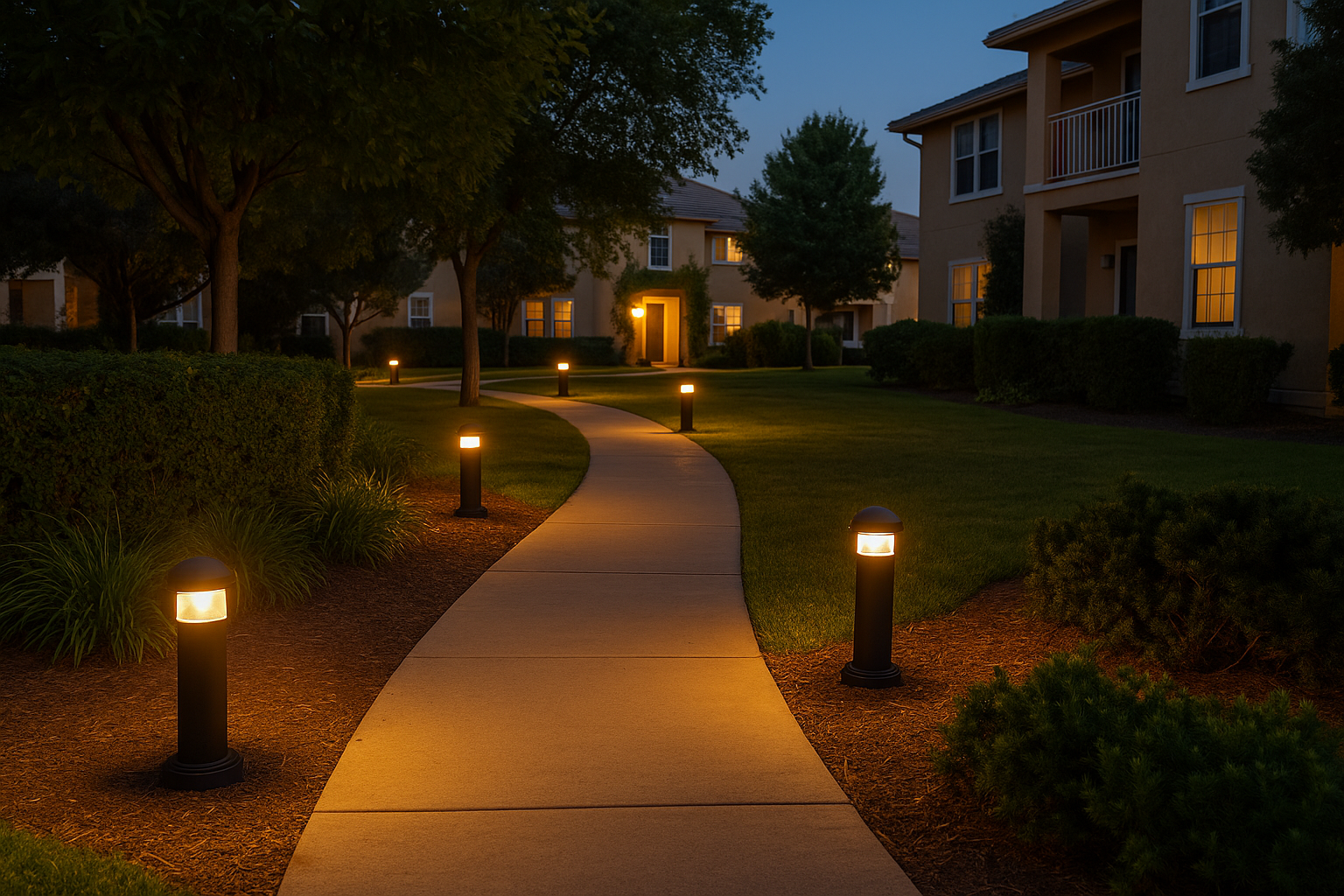
Creating a secure and welcoming environment for residents in homeowners’ associations (HOAs) and condominium associations (COAs) involves more than just landscaping and routine upkeep—it includes smart, well-planned lighting. Proper lighting doesn’t just brighten up common spaces; it makes them safer, more inviting, and easier to navigate.
Why Safe Lighting Matters
Lighting plays a key role in how people feel about and move through a space. Well-lit areas discourage crime by reducing hiding spots and increasing visibility. Residents and guests feel safer and more at ease when walking at night, and hazards like uneven paths or steps are easier to avoid. On the other hand, poorly lit areas increase the risk of accidents and may even lower property values. Associations that neglect lighting can face resident complaints and potential legal liability.
Best Practices for HOA and COA Lighting
Illuminate Common Areas and Walkways
Sidewalks, paths, and recreational spots should always be well-lit to prevent falls and create a sense of openness. Motion-sensor lighting works especially well—it saves energy and lights up when someone walks by.
Ensure Adequate Parking Lot Lighting
Parking lots need bright, consistent lighting to reduce accidents and discourage theft or vandalism. LED lights are a smart pick for their long life and energy efficiency.
Focus on Entry Points
Entrances and exits should be well-lit to make coming and going safer and easier, especially after dark. A clearly lit front gate or doorway not only deters trespassers but also gives residents peace of mind.
Maintain Lighting Regularly
A single burned-out bulb can compromise the safety of a whole area. Routine inspections and quick repairs should be part of the association’s maintenance plan to keep things working as they should.
Use Energy-Efficient Options
LED fixtures, solar-powered lights, and smart timers cut energy costs without sacrificing safety. These solutions are both eco-friendly and budget-friendly in the long run.
Consider Aesthetic Integration
Good lighting doesn’t have to look industrial. Choose fixtures that blend with your community’s architecture and landscape. Lighting can be both functional and beautiful—enhancing gardens, pathways, and building features.
Legal and Liability Considerations
Associations have a duty to maintain safe environments. If someone gets injured due to poor lighting, it could become a legal issue. Keeping records of inspections, repairs, and upgrades not only improves safety—it also protects the HOA or COA from potential claims.
Conclusion
Lighting is one of the simplest yet most powerful ways to create a safer and more enjoyable living environment. For HOAs and COAs, investing in smart, sustainable lighting shows residents that their safety and comfort matter. Whether it’s lighting up pathways or upgrading to energy-efficient fixtures, a brighter community is a better community for everyone.
Popular in the Community
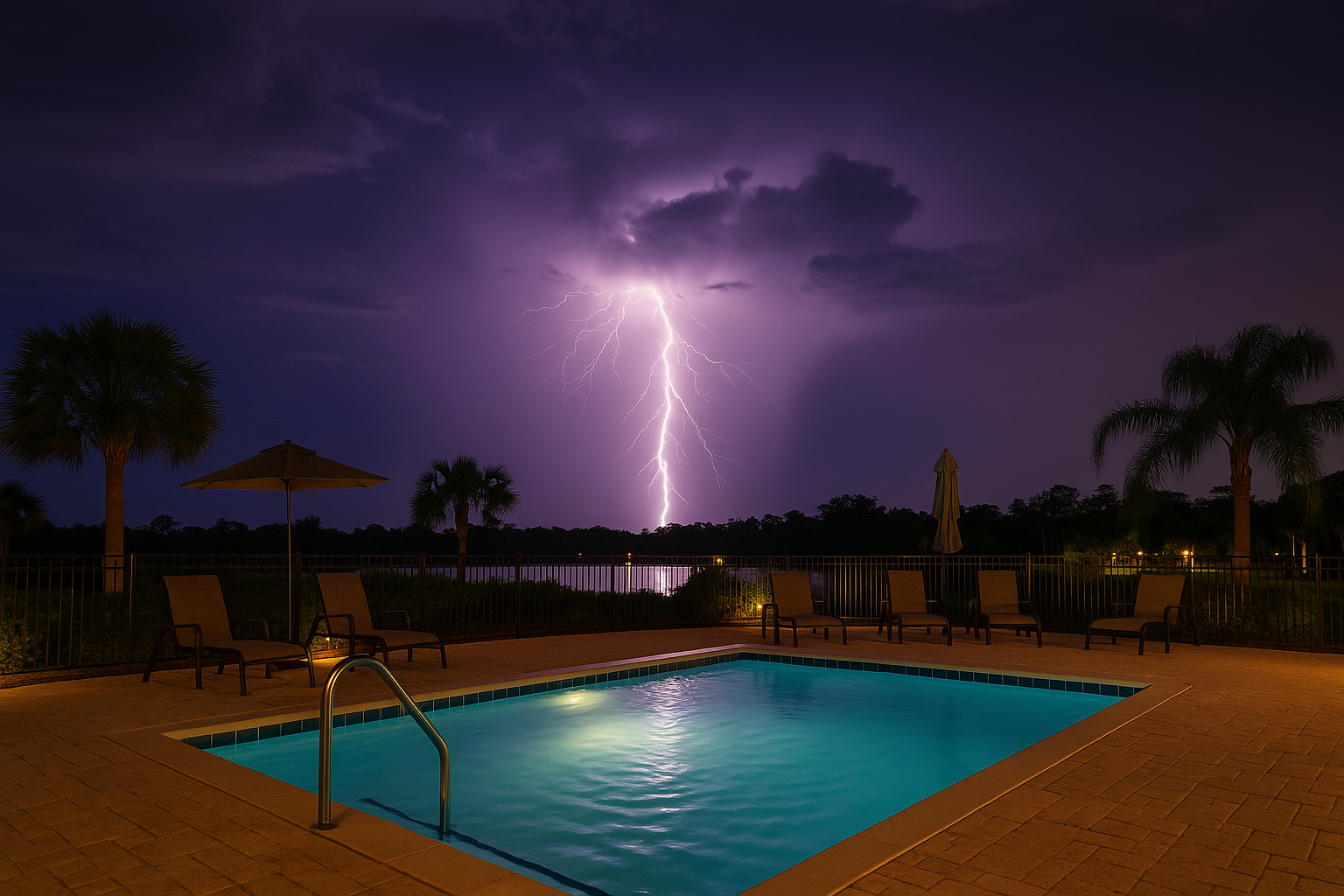
Lightning Alert Systems: Protecting Florida Communities from the Storm
Written by Heidi Hensell
December 17, 2025
Table of Contents
- Introduction
- What Is a Lightning Alert System?
- Why Every Community Association Should Care
- Florida‑Specific Considerations
- How to Choose & Implement a System
- Final Thoughts
Florida is famous (or infamous) for its heavy lightning activity—earning the title “Lightning Capital of the U.S.” Each year, thousands of strikes occur, especially in the summer months. For community associations, this isn’t just a weather issue—it’s a matter of safety, risk management, and legal obligation.
What Is a Lightning Alert System?
A lightning alert system is a technology that detects nearby lightning or electrical storms and provides real‑time warnings through sirens, warning lights, strobe lights, horn blasts, or app/phone notifications. These systems are often installed to protect high‑use outdoor common areas such as:
Swimming pools
Playgrounds and splash pads
Tennis courts, basketball courts, and sports fields
Outdoor event spaces, gazebos, patios
Why Every Community Association Should Care
1. Resident Safety
Outdoor areas are frequent gathering points, especially during warm, Florida weather. When a lightning alert system gives advance warning, residents, staff, and guests have time to move indoors safely. These systems are critical in preventing injuries caused by surprise storms.
2. Liability Protection
In case of an accident, storm damage, or injury due to a lightning strike, a properly installed alert system can serve as evidence that the community association took reasonable precautions. Without one, the association could face legal challenges for failing to warn or protect.
3. Better Amenity Management
Many HOAs already have rules about closing pools or recreational areas during storms—but relying on staff to monitor weather manually can be inconsistent. An automated alert system allows for uniform, data‑driven enforcement of closures or evacuations based on actual lightning risk.
Florida‑Specific Considerations
Because storms in Florida often develop quickly, manual weather observation is not enough. Real‑time lightning detection and alert systems are more reliable, triggering safety warnings even when the storm is not yet visible. Many Florida parks and recreation departments use systems that issue horn blasts, strobe lights, or both when lightning is detected within a certain radius (for example, 10 miles) to alert people to seek shelter.
How to Choose & Implement a System
Detection radius & speed: Systems should sense in‑cloud and cloud‑to‑ground lightning and issue alerts with enough lead time.
Alert methods: Use multiple channels (audible horns, lights, mobile app alerts) so that everyone in the area is warned.
Policy & procedure: Define what triggers closure of amenities, how staff respond, where shelter is located, and when it’s safe to resume activities.
Maintenance & testing: Routine checks of sensors, sounds, and lights so the system works when it counts.
Local rules & codes: Ensure your system meets local Florida regulations for parks or recreation areas.
Final Thoughts
Investing in a reliable lightning alert system is more than just an enhancement—it’s a necessary measure for Florida community associations. It supports safety, reduces legal risk, and helps associations manage their outdoor amenities responsibly. By combining technology with policy, training, and communication, boards can show residents that safety is a priority—even when storms roll in unexpectedly.
Popular in the Community
Student Loans and Mortgages: How to Make Both Work for You
Written by Heidi Hensell
December 16, 2025
Table of Contents
For many prospective homeowners, student loan debt plays a significant role in the mortgage process. With the rising cost of education, millions of Americans carry student loans—making credit scores, debt-to-income ratios (DTI), and mortgage eligibility key considerations. Understanding how student debt impacts homeownership and implementing smart strategies can help buyers make their homeownership dreams a reality.
How Student Debt Affects Mortgage Qualification
Mortgage lenders focus heavily on the debt-to-income (DTI) ratio—monthly debt payments compared to gross income. High student loan payments raise DTI, potentially limiting mortgage size or approval.
Credit scores are equally crucial. Student loans themselves don’t harm your score, but late or missed payments certainly can. Lenders also assess credit history length, credit mix, and recent inquiries, which all influence approval odds and interest rates.
Strategies for Managing Student Debt Before Buying a Home
Understand Your Loan Details
Know your loan types, interest rates, repayment plans, and monthly requirements. Federal loans offer flexibility through income‑driven plans, while private loans often come with fewer options—so understanding your terms is essential.
Pay Down Debt Strategically
It may not be feasible to eliminate student loans entirely before homebuying, but reducing high-interest debt helps lower your DTI and improves buying power. Even making small extra payments can yield gains over time.
Consider Refinancing
Refinancing may lower your monthly payments or interest rate, freeing up income for mortgage qualification. Be cautious, though—refinancing federal loans into private ones may eliminate certain borrower protections.
Save for a Larger Down Payment
A strong down payment reduces the loan amount needed and potentially secures better interest rates—improving affordability and offsetting the impact of student debt.
Work with a Knowledgeable Lender
Lenders familiar with student loan repayment options can evaluate your DTI more favorably. Some may accept income-driven repayment plans at reduced effective monthly payments, improving eligibility.
Long-Term Considerations
Balancing student debt with homeownership requires strategic planning. Homeownership comes with long-term financial commitments—mortgage payments, taxes, insurance, and maintenance. Ensuring your student loans remain manageable alongside these costs is essential to prevent financial stress.
Conclusion
Student debt doesn’t have to stand in the way of homeownership, but it does require careful planning. Understanding your loans, managing payment strategies, saving aggressively, and partnering with informed lenders can help you navigate the mortgage process successfully. With the right approach, it’s possible to turn student debt into a stepping-stone toward achieving your goal of owning a home.
Popular in the Community
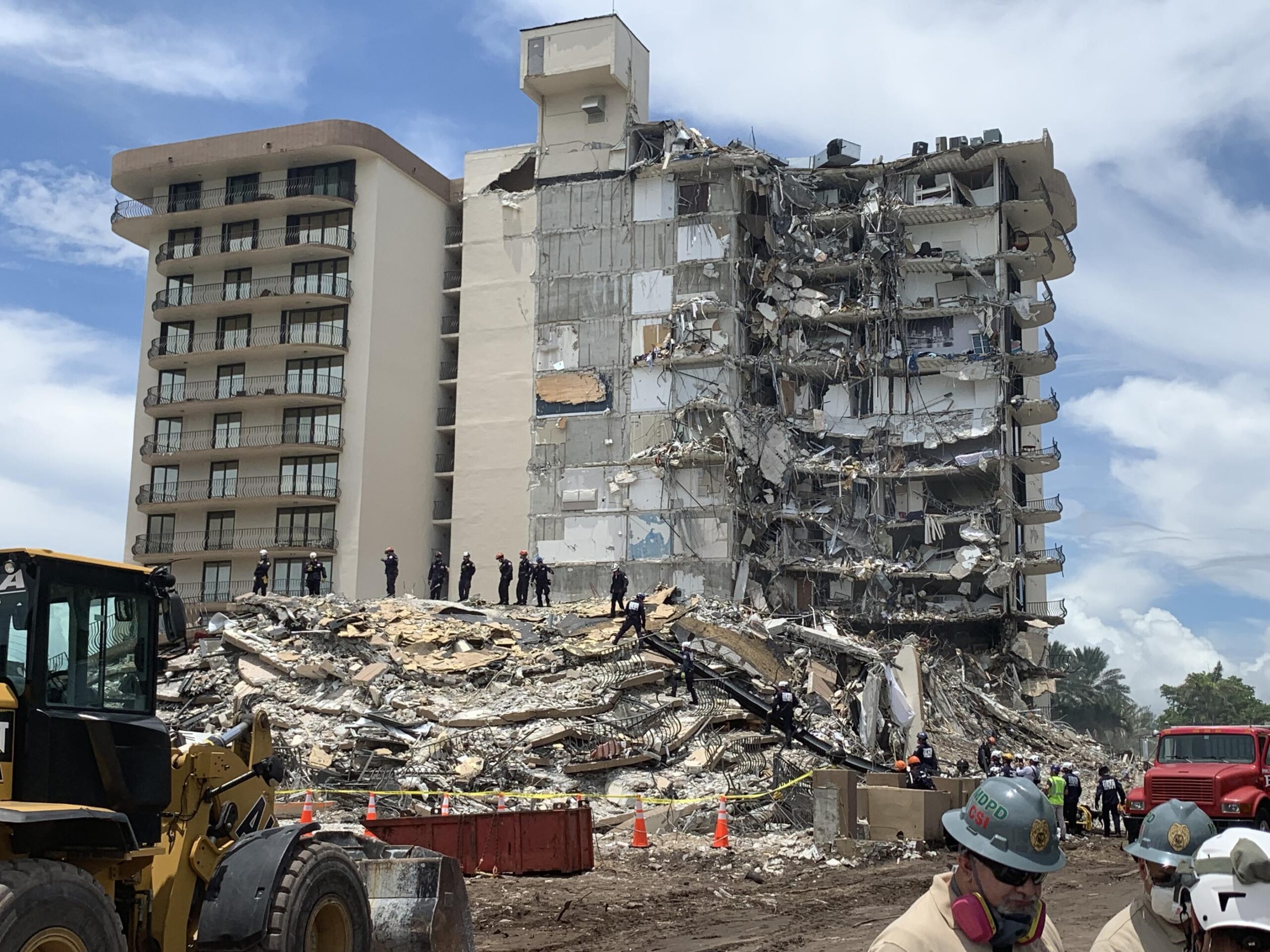
Milestone Inspections: A Must‑Know for Florida Community Associations
Written by Heidi Hensell
December 15, 2025
Table of Contents
- Introduction
- What Are Milestone Inspections & When Are They Required
- What the Inspection Process Involves
- Association Responsibilities & Compliance
- Why It Matters
- Final Thoughts
Florida’s 2022 Building Safety reforms, enacted after the tragic Surfside condominium collapse, included milestone inspections for condos and cooperative buildings. For community associations, these inspections aren’t optional—they are legal obligations that safeguard both residents and property values.
What Are Milestone Inspections & When Are They Required
A milestone inspection is a structural evaluation conducted by a licensed architect or engineer to assess load‑bearing systems and overall building integrity. Florida law (Chapter 553.899, SB 4‑D) mandates that all condominium or cooperative association buildings three or more stories tall must undergo milestone inspections under the following schedule:
30 years after the building’s Certificate of Occupancy (CO), or
25 years if the building is within 3 miles of a coastline.
Then, inspections every 10 years thereafter.
What the Inspection Process Involves
Milestone inspections consist of two phases:
Phase One: A visual examination of both habitable and non‑habitable areas, major structural and load‑bearing elements. If no “substantial structural deterioration” is found, Phase Two is not required.
Phase Two: Triggered only if Phase One identifies signs of deterioration. It can involve more detailed, possibly destructive or non‑destructive testing to precisely assess damage and recommend repairs.
Association Responsibilities & Compliance
Community associations have several legal duties under the statute:
Scheduling and funding the inspection. The association is financially responsible for the milestone inspection for common elements.
Notification: The local enforcement agency sends notice to the association when an inspection is required. The association must notify all unit owners within 14 days.
Report filing: Phase One inspections must be completed within 180 days after notice is received. Reports must be sealed by a licensed architect or engineer. If Phase Two is needed, a progress report is required.
Remediation: If substantial structural deterioration is found, repairs must be addressed. Failure to comply with inspection or repair requirements can result in fines, legal exposure, or dwelling being declared unsafe.
Why It Matters
Safety first: Preventing another structural failure like Surfside means protecting lives.
Financial health: Buildings allowed to deteriorate may face huge repair bills, insurance issues, or loss in property value.
Legal & regulatory compliance: Noncompliance can lead to enforcement actions by local building departments or state agencies.
Transparency & trust: Keeping residents informed builds confidence, and clear processes help avoid surprises in assessments or repairs.
Final Thoughts
Milestone inspections are more than a regulatory checkbox—they are essential tools for preserving safety, structural integrity, and value in Florida’s aging condominium and cooperative housing stock. Associations should plan proactively: track inspection deadlines, budget for repairs, engage trusted professionals, and communicate clearly with homeowners.