Copyright © Kaloop 2025 All Right Reserved
Written by Chris Abbott
March 24, 2026
Vacation rentals have become increasingly popular across Florida, offering homeowners flexible income opportunities and increased property use options. However, within homeowners associations (HOAs) and condominium owners associations (COAs), short-term rentals must be carefully managed to maintain compliance, protect property values, and preserve community harmony.
Balancing owner flexibility with legal compliance and neighbor relations is essential for successful vacation rental integration.
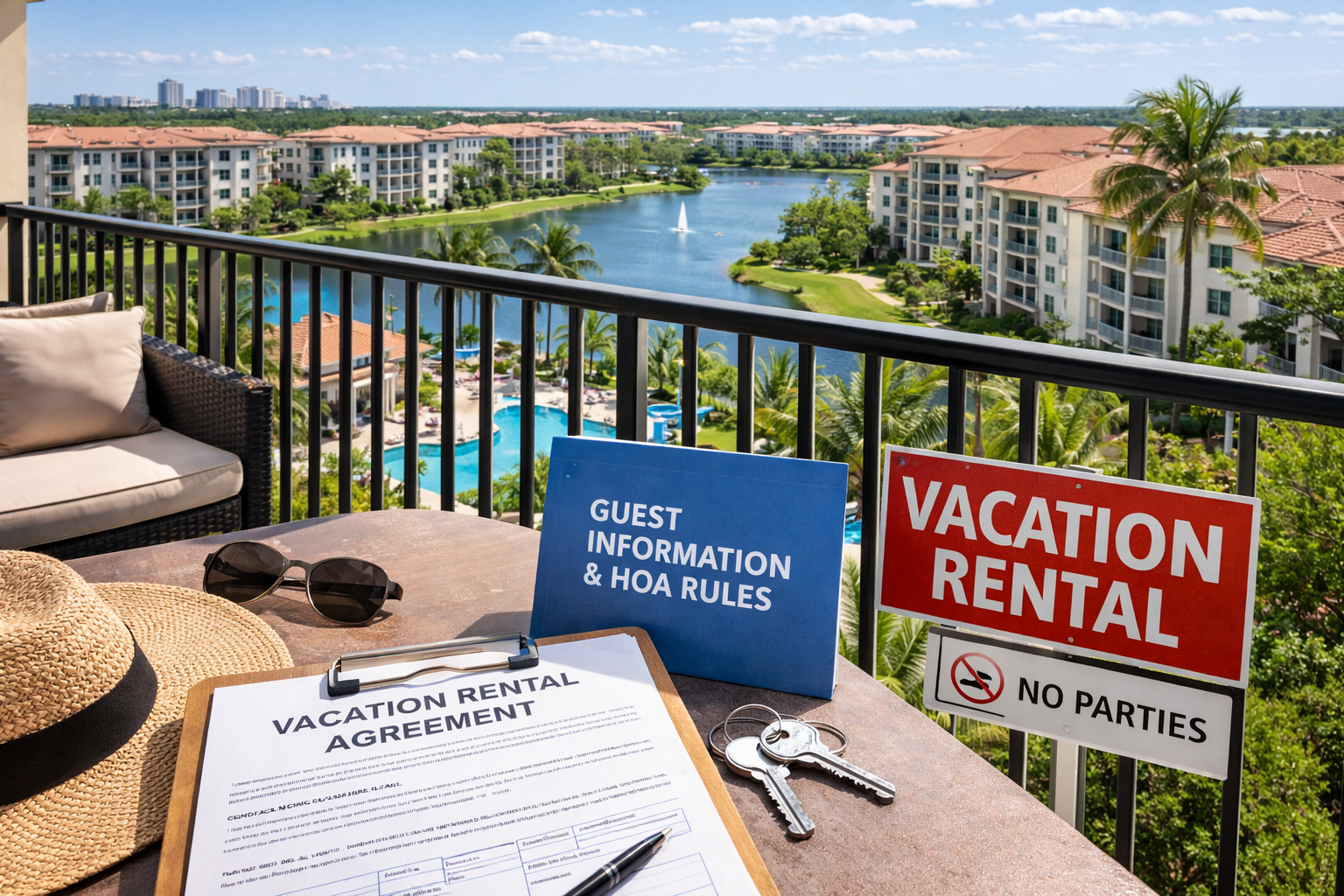
Most Florida associations have governing documents that outline specific rules regarding short-term rentals. These restrictions often include:
Minimum rental periods (e.g., 30-day minimums)
Maximum occupancy limits
Caps on the number of rentals per year
Guest registration or board approval requirements
Parking and amenity usage guidelines
Before listing a property on vacation rental platforms, owners must thoroughly review their association’s declaration, bylaws, and rules and regulations. Violating rental policies can result in fines, suspension of common area privileges, legal action, or forced termination of rental agreements.
Clear policies protect both the association and individual homeowners.
Insurance is one of the most overlooked aspects of vacation rentals in Florida HOAs and COAs. Standard homeowners insurance policies often exclude coverage for business-related activities, including short-term rentals.
Best practices include:
Confirming coverage for rental activity with your insurer
Obtaining a landlord or short-term rental endorsement
Carrying adequate liability insurance
Ensuring compliance with association insurance requirements
Many associations require proof of rental insurance before approving leases. Adequate coverage protects owners, guests, and the broader community from liability risks.
For association boards, enforcement and communication are critical. A proactive approach reduces disputes and strengthens compliance.
Effective board strategies include:
Publishing clear rental guidelines
Providing educational materials for owners
Establishing consistent enforcement policies
Maintaining accurate rental registration records
Responding promptly to violations
Consistency is key. Selective enforcement can expose associations to legal challenges and undermine community trust.
Owners play an equally important role in maintaining community standards. Responsible rental practices include:
Communicating association rules to guests
Implementing structured check-in and check-out procedures
Monitoring occupancy limits
Ensuring guests follow parking and amenity rules
Maintaining transparency with management or the board
Guests who understand community expectations are more likely to respect common areas and neighboring residents.
Florida’s strong tourism market makes vacation rentals attractive, but associations must protect long-term property values and resident quality of life. Clear policies, proper insurance coverage, and consistent enforcement allow communities to integrate rentals without compromising safety or stability.
When managed properly, vacation rentals can coexist within HOAs and COAs while maintaining financial health and neighbor relations.
By understanding governing documents, complying with insurance requirements, and implementing best practices, Florida associations can successfully navigate the complexities of short-term rentals—ensuring compliance, minimizing disputes, and preserving community harmony.