EV Charging Stations in Community Associations: Planning Today for a Sustainable Tomorrow

EV Charging Stations in Community Associations: Planning Today for a Sustainable Tomorrow

Written by Heidi Hensell

November 12, 2025

Table of Contents

Share

Link copied to clipboard!

Electric vehicles (EVs) are rapidly becoming mainstream, prompting community associations to consider whether to install EV charging stations. For many communities, the answer is increasingly “yes.” With forward-looking strategies, associations can future-proof their property, increase appeal, and deliver eco-friendly amenities.

Why EV Charging Stations Matter

Residents with EVs expect accessible charging options. Installing EV chargers not only meets that expectation but also elevates property values, attracts environmentally conscious buyers, and shows proactive community stewardship.

Key Considerations for Community Managers

  1. Infrastructure & Electrical Capacity
    Before installation, associations should assess whether existing electrical systems can support EV load—or if upgrades are needed. Level 1 or 2 chargers may require transformer or panel enhancements. Understanding existing infrastructure, upfront and for future demand, ensures project success.
  2. Common vs. Assigned Use
    Determine if charging stations will be shared, first-come-first-served, or assigned to specific units. Clear usage, billing, and access rules help manage equity and accountability.
  3. Cost Allocation
    Identify how costs—installation, electricity, maintenance—are shared. Options include homeowner responsibility, shared HOA funding, or reimbursed usage. Exploring grants or incentives can also help reduce costs.
  4. Policy Development
    Update governing documents to include EV charging processes, from application to approval. Establish clear application timelines and enforceable guidelines.
  5. Vendor Selection
    Choose reputable vendors offering setup, billing, and monitoring services. Integration with platforms that enable usage tracking and smart charging improves management efficiency.

Best Practices for Implementation

  • Conduct Site Assessments: Evaluate parking areas for charger accessibility and electrical proximity.

  • Understand Legal Requirements: Some states prohibit unreasonable restrictions on EV charger installations and require board response within set timeframes.

  • Engage Resident Feedback: Survey homeowners to gauge interest and guide planning efforts.

Conclusion

EV charging stations are no longer optional—they’re an expected amenity. With smart electrical planning, fair policies, and strategic vendor selection, associations can elevate their communities while meeting increasing demand for sustainable living. Thoughtful implementation today can power sustainable community management tomorrow.

Popular in the Community

ChatGPT Image Mar 3, 2026, 04_28_39 PM
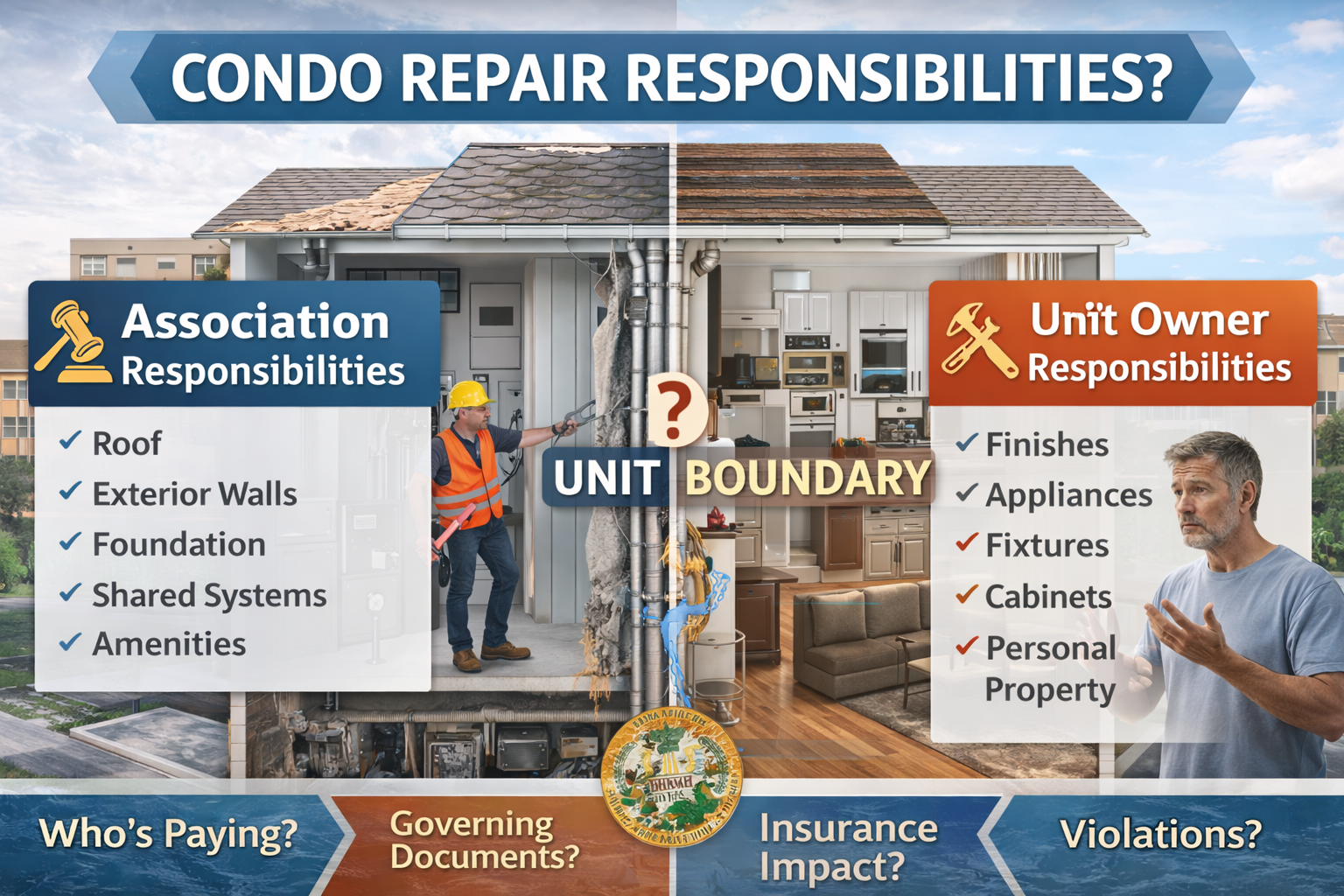
Who Is Responsible for Repairs in a Condo? Understanding Association vs. Owner Obligations
Confused about condo repair responsibilities? Learn how Florida condo associations and unit owners divide...

Learn more
ChatGPT Image Mar 3, 2026, 04_20_15 PM
What Happens When Condo or HOA Owners Refuse Access for Repairs?
Learn what happens when condo or HOA owners refuse access for necessary repairs. Understand association...

Learn more
ChatGPT Image Mar 3, 2026, 04_10_10 PM
Common Insurance Gaps That Surprise Condo and HOA Owners
Discover common condo and HOA insurance gaps, including interior coverage limits, loss assessment risks,...
Learn more