Common Insurance Gaps That Surprise Condo and HOA Owners

Written by Chris Abbott

April 23, 2026

Table of Contents

Share

Link copied to clipboard!

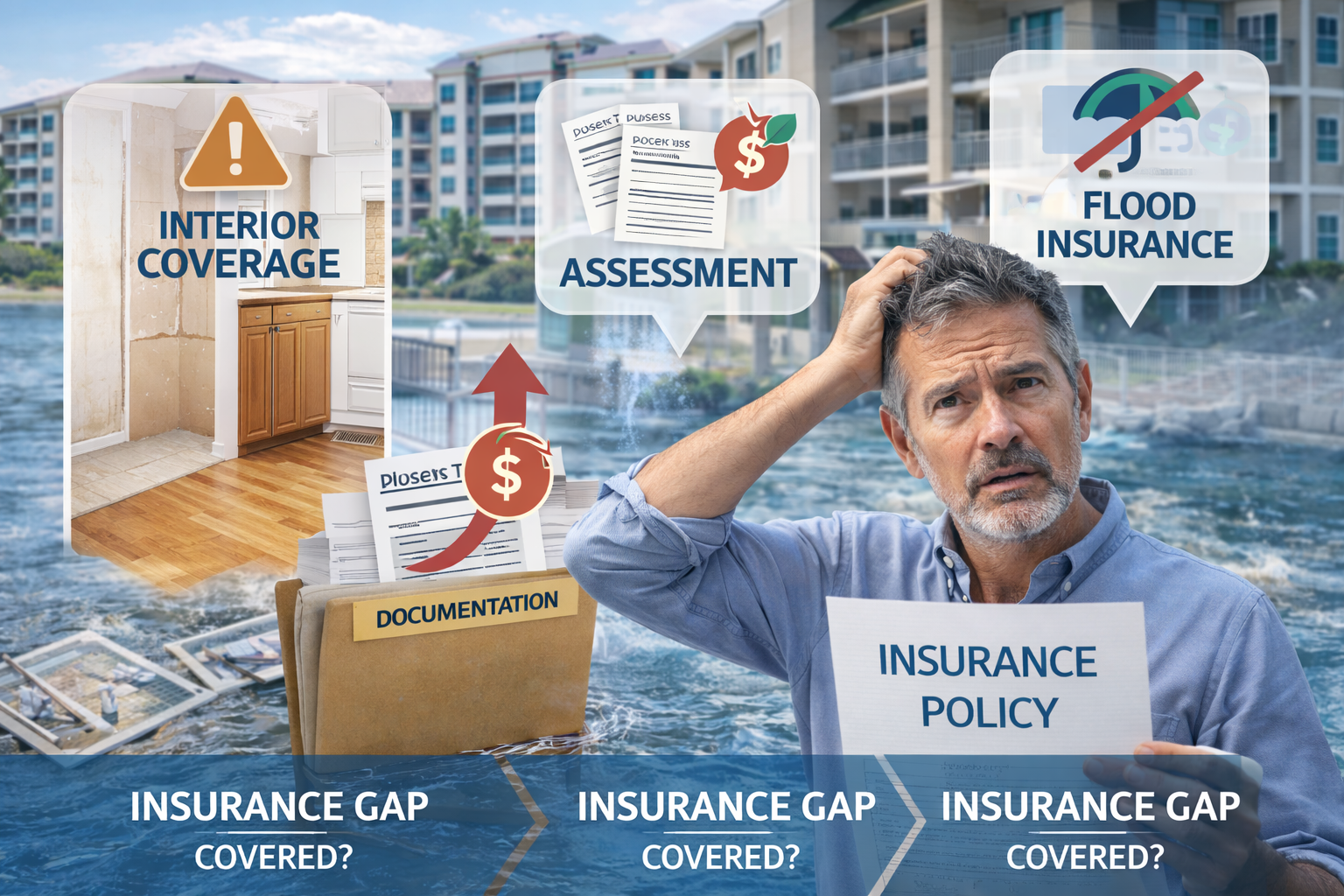
Many condo and HOA owners assume that either the association’s master policy or their personal insurance policy will cover any potential loss. Unfortunately, insurance gaps are common—and they are often discovered only after damage occurs.

Understanding these gaps before a claim arises can prevent costly financial surprises.

Interior Finish Coverage Gaps

One of the most misunderstood areas of coverage involves interior finishes. Depending on the association’s master policy, coverage may stop at unfinished drywall. This means cabinets, flooring, countertops, built-ins, and fixtures could fall entirely under the unit owner’s responsibility.

Owners who do not carry adequate HO-6 or unit owner coverage may face significant out-of-pocket repair costs following water, fire, or storm damage.

Reviewing both the association’s governing documents and master policy is essential to determine where coverage begins and ends.

Loss Assessment Exposure

Another frequent surprise involves loss assessment coverage. When associations experience a major loss and levy a special assessment to cover deductibles or uninsured portions of the claim, individual owners may be required to contribute.

Owners without sufficient loss assessment coverage on their personal policy may struggle to pay these unexpected costs. Increasing loss assessment limits is often relatively affordable compared to the financial risk of being underinsured.

Flood Insurance Gaps

Flood damage is another common coverage gap. Standard property insurance policies—both association master policies and personal condo policies—typically exclude flood damage.

Separate flood insurance policies are required for protection against rising water, storm surge, or other flood-related events. Without this coverage, owners and associations may be left fully responsible for repairs.

Bridging the Coverage Gap

Insurance gaps are not always obvious, which is why proactive education matters. Associations can support owners by clearly communicating what the master policy covers—and what it does not.

Owners should:

  • Review their personal policy annually

  • Confirm interior coverage limits

  • Evaluate loss assessment coverage

  • Consider flood insurance where appropriate

Insurance planning is a shared responsibility. By understanding common coverage gaps, condo and HOA owners can make informed decisions and reduce financial risk before the next loss occurs.

Popular in the Community

ChatGPT Image Mar 3, 2026, 04_10_10 PM
Common Insurance Gaps That Surprise Condo and HOA Owners
Discover common condo and HOA insurance gaps, including interior coverage limits, loss assessment risks,...
Learn more
ChatGPT Image Mar 3, 2026, 04_00_16 PM
Why Proper Documentation Matters for Condo and HOA Insurance Claims
Learn why proper documentation is critical for condo and HOA insurance claims. Discover best practices...
Learn more
ChatGPT Image Mar 3, 2026, 02_58_35 PM
What To Do After a Loss: Claims, Deductibles, and Timelines for Condo & HOA Associations
Learn what condo and HOA associations should do after property damage, including filing insurance claims,...
Learn more