Copyright © Kaloop 2025 All Right Reserved
Written by Chris Abbott
April 2, 2026
Effective communication is one of the most important responsibilities of a condominium association. Yet it remains one of the most common sources of frustration for owners. When communication breaks down, misunderstandings grow, trust erodes, and minor issues can quickly escalate into major disputes.
Improving owner communication is not about sending more messages—it is about delivering clearer, more consistent, and more accessible information.
Condo associations regularly communicate about budgets, maintenance projects, rule enforcement, inspections, and legal compliance. Problems often arise when information is incomplete, overly technical, or delivered too late.
Boards can improve communication by focusing on:
Clear explanations of decisions
Timely updates before major changes occur
Transparent reasoning behind assessments or projects
Summaries that highlight key owner impacts
Owners do not need every technical detail, but they do need to understand how decisions affect them financially and operationally.
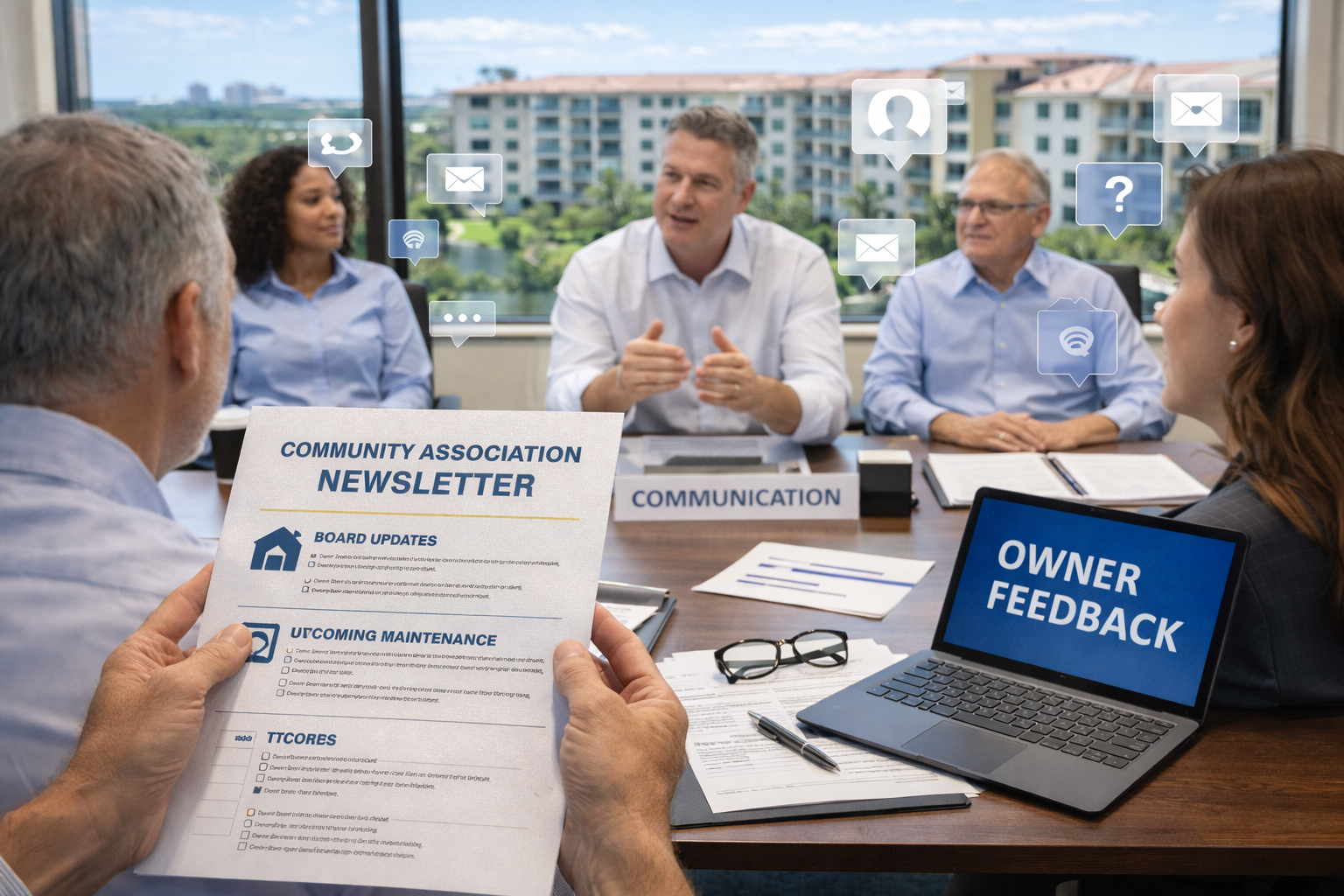
Consistency builds confidence. Regular updates—such as monthly emails, quarterly newsletters, or secure owner portal announcements—help residents feel informed and included.
Even when there is no major news, a brief update reassures owners that the board is engaged and proactive. Silence, on the other hand, often leads to speculation and unnecessary concern.
Establishing predictable communication schedules also reduces repetitive questions and improves overall efficiency.
Legal and financial matters can be complicated, especially when discussing reserve funding, milestone inspections, or insurance changes. Breaking information into manageable sections and using plain language makes complex issues easier to understand.
Consider using:
Bullet-point summaries
Frequently asked questions
Visual charts or simplified financial overviews
Dedicated information sessions for major projects
Clarity reduces confusion and prevents misinformation from spreading within the community.
Strong communication is not one-sided. Associations that provide clear channels for feedback are more likely to resolve concerns early.
Options may include:
Dedicated association email addresses
Structured owner forums during meetings
Online submission forms through management portals
While boards cannot accommodate every request, listening to concerns builds goodwill and strengthens trust.
Ultimately, effective communication supports a healthier condominium community. Owners who feel informed are more likely to comply with rules, support necessary projects, and respect board decisions.
For condo associations, investing in better communication is one of the most practical and impactful ways to reduce conflict, increase engagement, and promote long-term stability.