Laundry Systems and Community Associations in Florida: Clean, Convenient, and Compliant

Laundry Systems and Community Associations in Florida: Clean, Convenient, and Compliant

Written by Heidi Hensell

December 19, 2025

Table of Contents

Share

Link copied to clipboard!

Laundry systems might not be flashy, but in Florida’s multi‑unit communities—condominiums, HOAs, and co‑ops—they are vital for resident satisfaction, safety, and worry‑free operations. Done well, laundry systems offer convenience, value, and peace of mind; done poorly, they bring safety risks, high utility bills, and friction.

Key Considerations for Associations

1. Maintenance & Safety

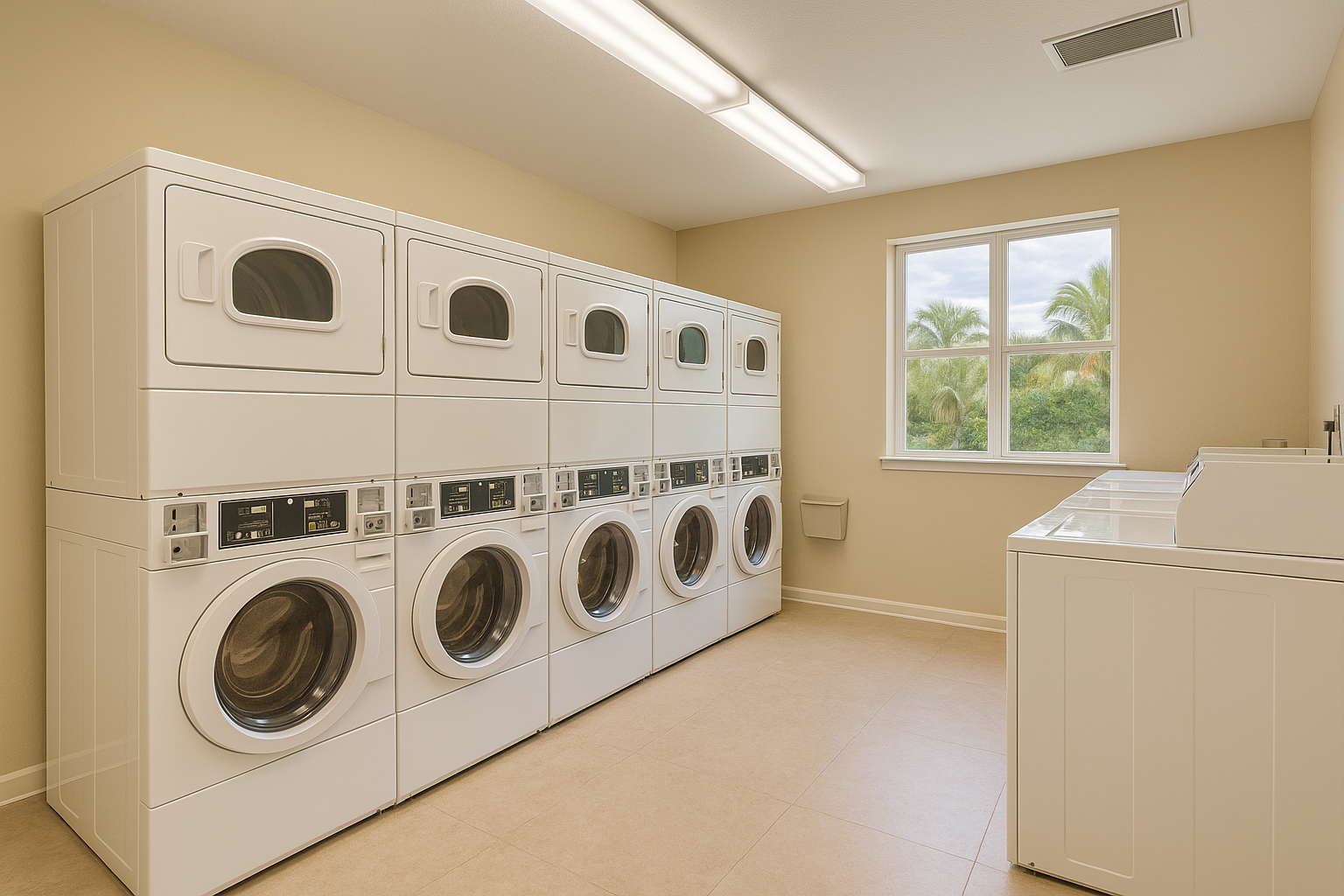
Community laundry rooms and in‑unit laundry systems must receive regular maintenance. Pay attention to plumbing leaks, machine wear, and most importantly—dryer vents. Clogged dryer vents are a major fire hazard. Ensure vents are properly cleaned, maintained, and vented to the exterior. Also, in shared laundry rooms, waterproof flooring, safe electrical connections, and good ventilation are essential.

2. Water Use & Utility Costs

Older washers and dryers often consume much more water and energy. Associations should consider upgrading to high‑efficiency, Energy Star machines or explore third‑party service providers. Not only will this reduce utility costs, but also the environmental impact—especially important in Florida, where water conservation and sustainability are growing concerns.

3. Vendor Contracts

Many communities contract with laundry service providers who supply machines, collect revenue, and handle maintenance. These contracts should be carefully reviewed: look for transparency in revenue sharing, machine upkeep, responsiveness to repairs, and fair pricing. Pay attention to who handles what parts: service, parts, and liability for damage or malfunctions.

4. Accessibility & Fair Use

Laundry systems must comply with ADA requirements where applicable. This includes machine height, control accessibility, clear floor space in front of machines, routes to laundry rooms, and usability of payment systems. For example, the U.S. Access Board’s standards require clear floor/carpet space, reachable operable parts, and appropriate height limits for machine openings.

Set rules for fair usage—time limits, cleanliness expectations, and respectful scheduling—to prevent conflicts and ensure shared spaces serve everyone well.

5. Insurance & Liability

Laundry systems can cause significant exposure: water damage from leaks, fire risk from lint or vent issues, etc. Associations should ensure their insurance policies cover laundry‑related risks, especially water damage and fire. Also, make sure homeowners understand their responsibilities (e.g. in‑unit appliance maintenance, venting, etc.) to prevent gaps in coverage.

Florida‑Specific Tip

Florida’s high humidity and damp climate increase the risk of mold and mildew in laundry areas. To combat this, ensure laundry rooms—especially common ones—have excellent ventilation. Encourage regular inspections of dryer vents and machines, seal leaks promptly, and maintain clean, dry surroundings to prevent mold growth.

Final Thoughts

A well‑managed laundry system adds real value to a community—it boosts resident satisfaction, enhances safety, and helps control costs. But to reap benefits, associations must be proactive: maintain systems, choose high‑efficiency machines, ensure ADA compliance, and manage risk smartly. In Florida, moisture and climate add extra layers of concern, so staying on top of these systems is more than just maintenance—it’s preserving quality of life.

Popular in the Community

Diverse friends are toasting green beer, celebrating st
St. Patrick’s Day in Your Florida HOA or COA: Celebrating Safely
Planning St. Patrick’s Day celebrations in a Florida HOA or COA? Learn how to stay compliant with community...
Learn more
Noise complaint Annoyed woman blocking ears with pillows on a couch
Noise Compliance in Florida COAs and HOAs: What Residents Should Know
Learn how noise compliance works in Florida HOAs and COAs, including quiet hours, local ordinances, and...
Learn more
Friends socializing and enjoying a backyard BBQ, grilling food at a summer cookout
BBQ Pits and “Public” Bathrooms in COAs: Balancing Fun and Responsibility
BBQ pits and public bathrooms can enhance COA living. Learn how rules, maintenance, and shared responsibility...
Learn more