Gas Stations in HOA Communities: Convenience or Complication?

Gas Stations in HOA Communities: Convenience or Complication?
Written by Chris Abbott

June 11, 2026

Table of Contents

Share

Link copied to clipboard!

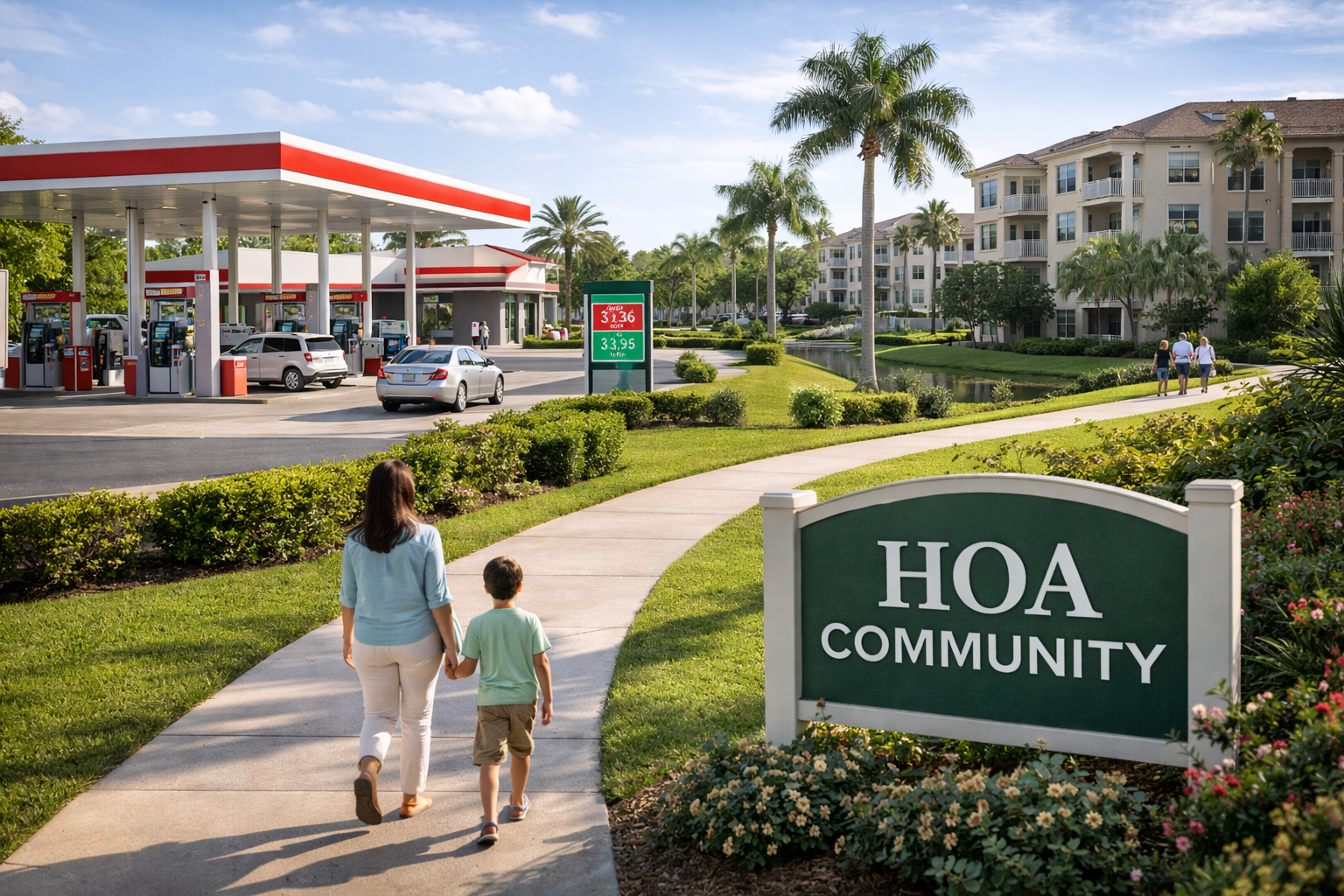
Gas stations located inside or adjacent to homeowners association (HOA) communities can feel like a major convenience. Residents enjoy quick fuel stops, easy access to snacks or basic supplies, and fewer trips outside the neighborhood. However, when a gas station becomes part of a community’s landscape, it often brings challenges along with that convenience.

Traffic and Safety Concerns

Gas stations naturally attract vehicle traffic throughout the day and night. For HOA communities, this can lead to increased congestion, higher wear on roads, and safety concerns for pedestrians, cyclists, and children.

Boards may need to evaluate traffic flow, entry points, and speed control measures to reduce risks and maintain safe conditions for residents.

Noise, Lighting, and Aesthetics

Gas stations often operate late into the evening or even 24 hours a day. Delivery trucks, customer traffic, and bright canopy lighting can impact nearby homes.

Many associations rely on architectural guidelines and nuisance rules to manage these concerns. Landscaping buffers, restricted signage, and lighting controls can help balance commercial activity with the neighborhood’s residential character.

Environmental and Liability Issues

Fuel storage tanks and fuel handling introduce environmental considerations that residential communities typically do not face. Potential issues include spills, runoff, or underground storage concerns.

Even when an HOA does not own or operate the gas station, proximity may raise questions about insurance coverage, easements, and potential liability. Boards should understand how these risks are addressed through local regulations and insurance protections.

Zoning and Governing Documents Matter

Not all HOA communities permit commercial activity. Whether a gas station is allowed often depends on local zoning regulations and the association’s governing documents.

Before approving development near a community—or addressing an existing gas station—boards should review zoning rules, covenants, and land use restrictions carefully.

The Bottom Line

Gas stations in HOA communities can provide real convenience, but they also require thoughtful planning and oversight. Traffic, environmental considerations, and neighborhood character all need to be carefully managed.

With clear rules, effective communication, and proper zoning review, communities can balance convenience with safety, quality of life, and long-term property values.

Popular in the Community

aGVp03fc4bHWi-Lo_APM-HOA-President-Duties-blog
How to Choose the Right HOA or Condo President for Strong Community Leadership
Learn how to choose the right HOA or condo association president to ensure strong leadership, financial...

Learn more
shutterstock_2356241977
Choosing the Right Bank for Your HOA or Condo Association: What Boards Need to Know
Learn how to choose the right bank for your HOA or condo association, including key features like reserve...

Learn more
ChatGPT Image Mar 19, 2026, 11_47_23 AM
Best Property Management Software for HOAs and Condos: How to Choose the Right Platform
Discover how to choose the best property management software for HOAs and condos, including platforms...
Learn more