Lintel Damage in Condos and HOAs: The Hidden Structural Risk Above Your Doors

Lintel Damage in Condos and HOAs: The Hidden Structural Risk Above Your Doors
Written by Chris Abbott

July 2, 2026

Table of Contents

Share

Link copied to clipboard!

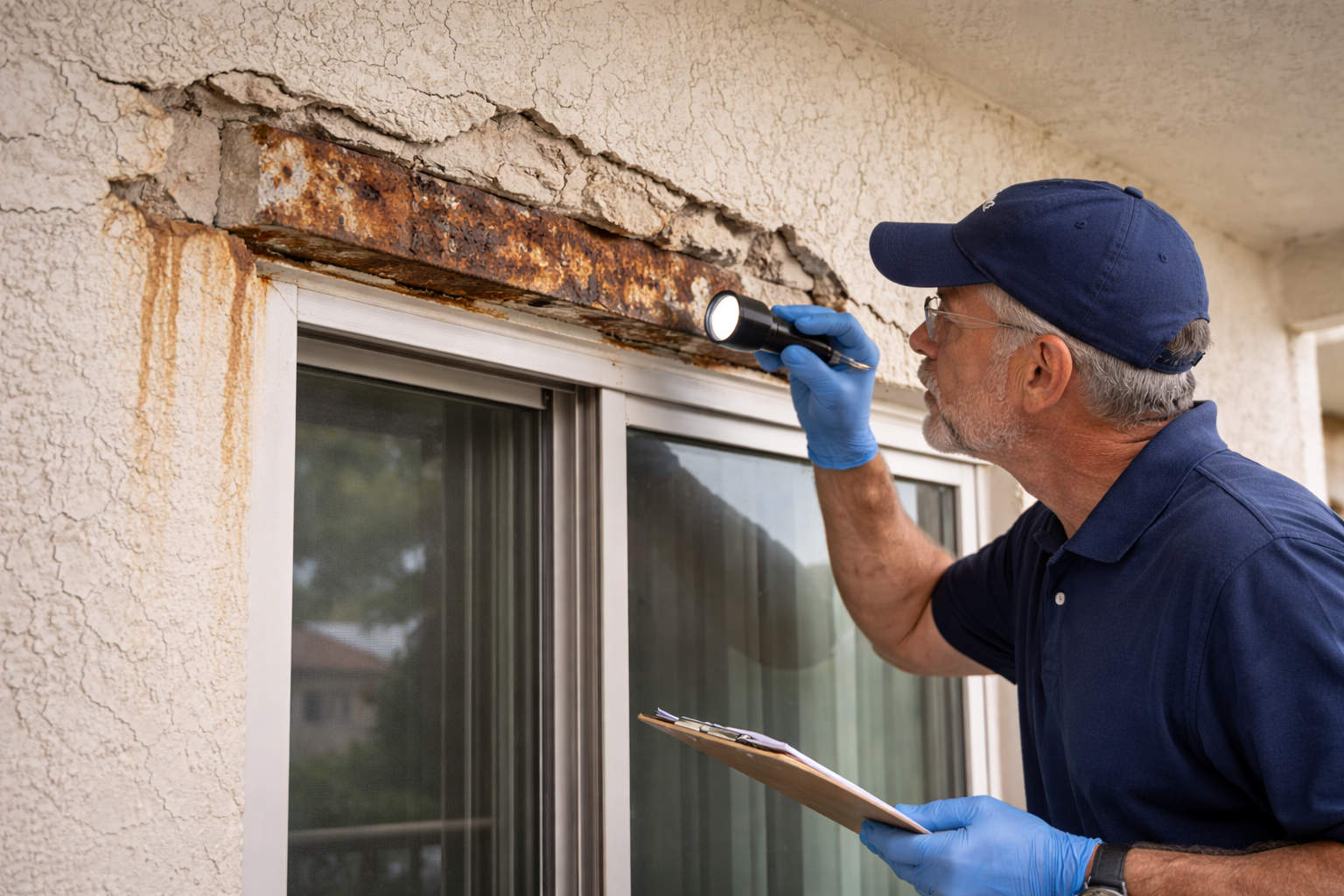
Door lintels are rarely noticed because they are usually hidden behind stucco, concrete, or brick. Yet they play one of the most important structural roles in any condominium or HOA building. A lintel sits directly above doors and windows, carrying the weight of the wall above the opening.

Without that support beam, the weight of the building would press directly down on the door frame.

What a Door Lintel Actually Does

A lintel is typically made from steel, reinforced concrete, or masonry. Its job is simple but critical: distribute the structural load around the door or window opening.

When lintels begin to weaken or fail, buildings often show early warning signs such as:

  • Cracks forming above doors or windows

  • Doors that begin sticking or jamming

  • Separation in stucco or masonry

  • Water intrusion near the opening

While these issues may appear cosmetic at first, they often indicate structural stress.

Why Lintel Problems Are Common in Florida

Florida’s climate can accelerate lintel deterioration. Heat, humidity, salt air, and moisture exposure can cause steel lintels to corrode and expand.

When steel rusts, it expands, placing pressure on the surrounding concrete or stucco. This expansion can cause visible cracking and allow water to enter the building envelope.

Over time, that moisture can lead to more corrosion, worsening the damage.

Why Early Repairs Matter

Some owners assume cracks above doors are minor cosmetic issues. In many cases, they are actually early signs of structural lintel deterioration.

Ignoring the problem allows rust, water intrusion, and structural stress to spread.

What begins as a small repair can eventually become a much larger wall reconstruction project if the lintel fails completely.

The Quiet Support System

Lintels are rarely seen, but they are essential structural components that quietly support every doorway and window in a building.

For HOA boards and condominium associations, regular inspections and prompt repairs help prevent small structural issues from turning into major building problems.

  • Improved package delivery options

  • Better security and locking systems

  • Compliance with modern postal standards

  • Reduced risk of mail theft

Popular in the Community

aGVp03fc4bHWi-Lo_APM-HOA-President-Duties-blog
How to Choose the Right HOA or Condo President for Strong Community Leadership
Learn how to choose the right HOA or condo association president to ensure strong leadership, financial...

Learn more
shutterstock_2356241977
Choosing the Right Bank for Your HOA or Condo Association: What Boards Need to Know
Learn how to choose the right bank for your HOA or condo association, including key features like reserve...

Learn more
ChatGPT Image Mar 19, 2026, 11_47_23 AM
Best Property Management Software for HOAs and Condos: How to Choose the Right Platform
Discover how to choose the best property management software for HOAs and condos, including platforms...
Learn more

Wet Insulation in Condos and HOAs: The Hidden Damage Water Leaks Can Cause
Wet Insulation in Condos and HOAs: The Hidden Damage Water Leaks Can Cause

Written by Chris Abbott

June 25, 2026

Table of Contents

Share

Link copied to clipboard!

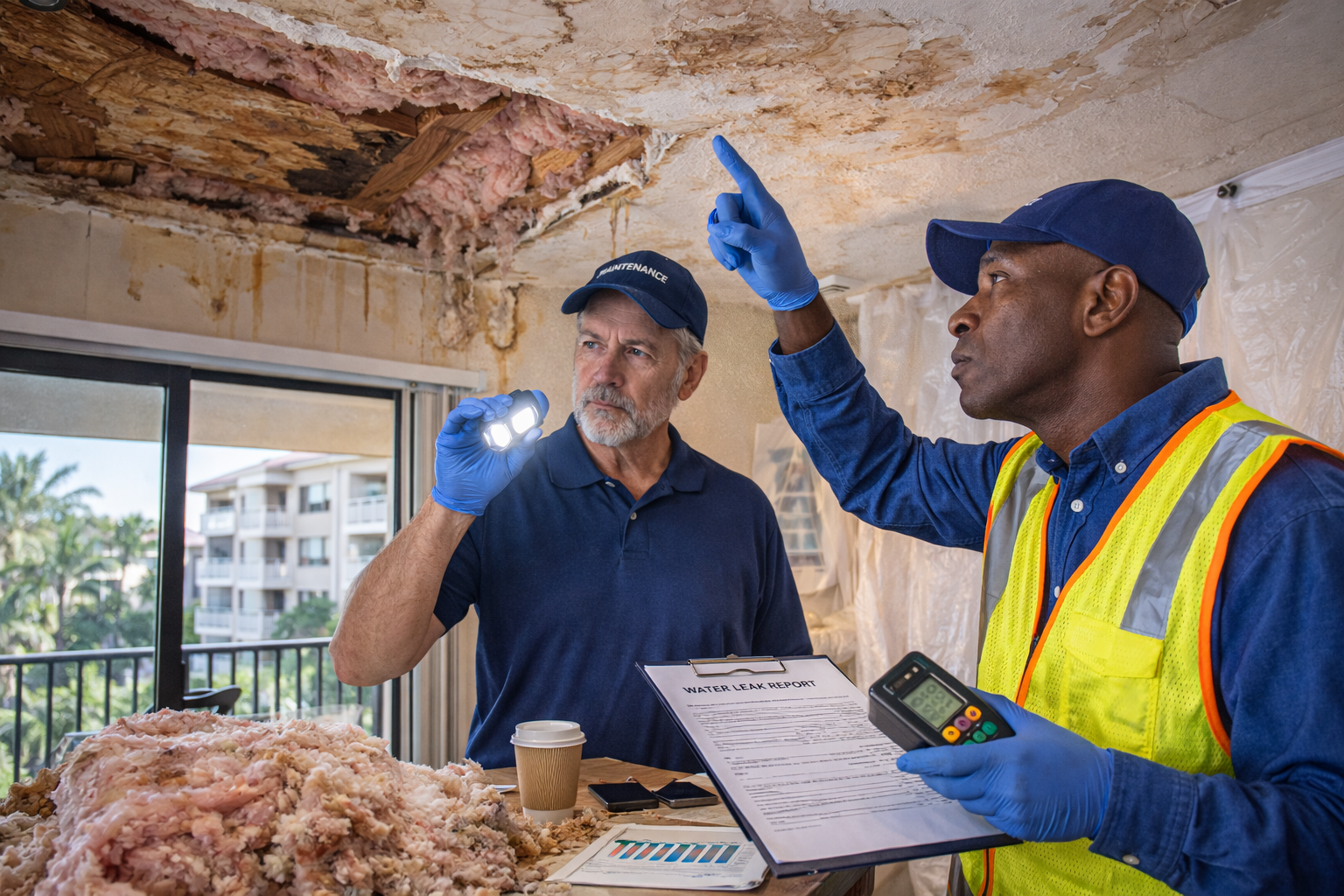
Water damage in condominium and HOA communities is not always dramatic. Sometimes it begins quietly—seeping into insulation hidden behind walls or above ceilings. When insulation becomes wet, the real damage often begins.

Why Wet Insulation Is a Serious Problem

Insulation plays a critical role in controlling temperature and moisture within a building. Once insulation becomes saturated, it quickly loses its ability to perform that job.

Instead of insulating, wet materials act like a sponge that traps humidity inside walls and ceilings. This trapped moisture creates ideal conditions for mold, mildew, and wood rot to develop. What may begin as a minor plumbing leak or roof drip can quickly escalate into a larger structural and air quality issue.

Damage That Spreads Beyond One Unit

In shared buildings, moisture problems rarely stay contained in one area. Water can travel through wall cavities, ceilings, and common structural components, affecting neighboring units and shared spaces.

For condominium and HOA communities, this means a small leak can impact multiple owners and common elements if not addressed quickly.

Prompt reporting and immediate investigation are essential to limit the spread of damage.

Insurance and Moisture Complications

Insurance coverage can become complicated when wet insulation is involved. Many policies cover sudden and accidental water damage but may exclude mold or damage caused by long-term moisture exposure.

Because of this, associations should prioritize:

  • Immediate leak detection and repair

  • Professional drying and remediation

  • Proper documentation of damage and response actions

These steps help protect both the building and potential insurance claims.

Early Action Protects the Community

Water stains, musty odors, or visible moisture should never be ignored. Even small warning signs can indicate insulation and structural materials are already absorbing water behind the scenes.

For HOA boards, property managers, and residents, early reporting and quick response are critical.

Wet insulation is not just a maintenance inconvenience—it is a hidden threat that can quietly damage an entire community if left unresolved.

Popular in the Community

aGVp03fc4bHWi-Lo_APM-HOA-President-Duties-blog
How to Choose the Right HOA or Condo President for Strong Community Leadership
Learn how to choose the right HOA or condo association president to ensure strong leadership, financial...
Learn more
shutterstock_2356241977
Choosing the Right Bank for Your HOA or Condo Association: What Boards Need to Know
Learn how to choose the right bank for your HOA or condo association, including key features like reserve...
Learn more
ChatGPT Image Mar 19, 2026, 11_47_23 AM
Best Property Management Software for HOAs and Condos: How to Choose the Right Platform
Discover how to choose the best property management software for HOAs and condos, including platforms...
Learn more

HOA Reserve Planning: How “Board Paralysis” Can Cost Communities Thousands

HOA Reserve Planning: How “Board Paralysis” Can Cost Communities Thousands

Written by Chris Abbott

June 18, 2026

Table of Contents

Share

Link copied to clipboard!

Every homeowners association (HOA) or condominium board eventually faces a difficult moment: the reserve study arrives, and the numbers are impossible to ignore. Roofs are aging, pavement is cracking, elevators are wearing down, and replacement timelines are approaching.

Yet instead of acting, some boards freeze.

This hesitation—often called board paralysis—can quietly cost communities significant money over time.

Reserve Studies Are More Than Financial Reports

Reserve studies are not just accounting documents. They provide a long-term roadmap showing when major components will need repair or replacement and how much those projects are expected to cost.

When boards delay acting on reserve study recommendations, small maintenance issues can quickly become expensive repairs. What could have been planned maintenance often turns into emergency projects or special assessments.

Why Board Paralysis Happens

Board hesitation usually stems from fear rather than lack of information. Board members may worry about:

  • Raising assessments or reserve contributions

  • Facing negative reactions from homeowners

  • Difficult budget conversations at meetings

  • Being blamed for unpopular financial decisions

In some cases, boards delay action while seeking additional opinions or hoping future boards will address the issue. Meanwhile, inflation and construction costs continue rising in the background.

Why This Matters Even More in Florida

For many Florida associations, delaying reserve planning has become increasingly risky. Recent legislative changes and structural safety concerns have heightened expectations around reserve funding and building maintenance.

Underfunded reserves do not eliminate the obligation to repair critical components—they simply make the eventual cost much higher.

The Solution: Progress Over Perfection

The solution to board paralysis is not perfection. It is progress.

Boards do not need to agree with every number in a reserve study, but they must take action. That may include:

  • Gradually increasing reserve contributions

  • Adjusting repair timelines responsibly

  • Communicating clearly with owners about future costs

Associations that move forward—even cautiously—protect their communities from financial shocks.

Popular in the Community

aGVp03fc4bHWi-Lo_APM-HOA-President-Duties-blog
How to Choose the Right HOA or Condo President for Strong Community Leadership
Learn how to choose the right HOA or condo association president to ensure strong leadership, financial...
Learn more
shutterstock_2356241977
Choosing the Right Bank for Your HOA or Condo Association: What Boards Need to Know
Learn how to choose the right bank for your HOA or condo association, including key features like reserve...
Learn more
ChatGPT Image Mar 19, 2026, 11_47_23 AM
Best Property Management Software for HOAs and Condos: How to Choose the Right Platform
Discover how to choose the best property management software for HOAs and condos, including platforms...
Learn more