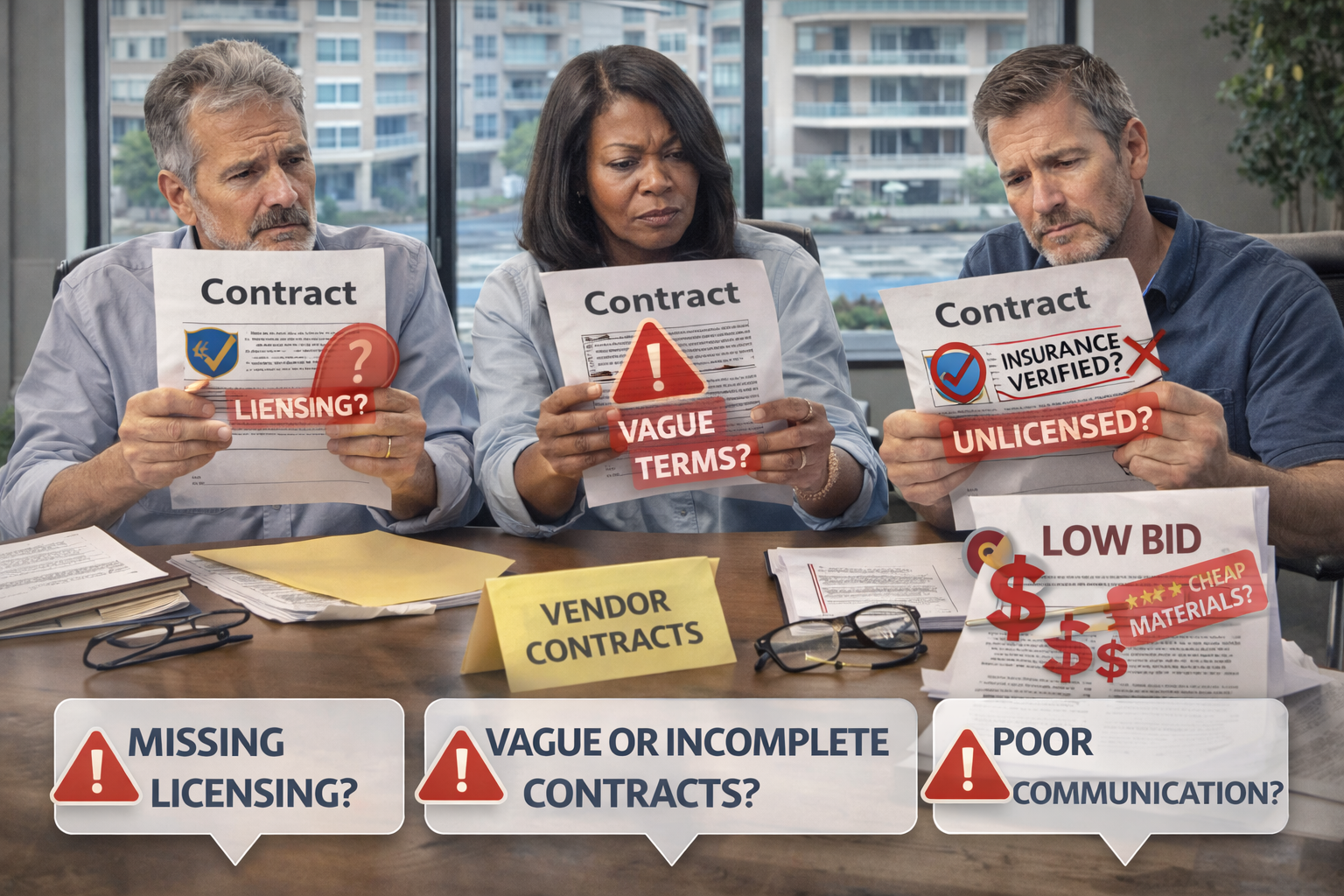
Managing Vendors: Red Flags Condo Boards Should Watch For

Managing Vendors: Red Flags Condo & HOA Boards Should Watch For

Written by Chris Abbott

May 7, 2026

Table of Contents

Share

Link copied to clipboard!

Vendors play a critical role in the daily operation and long-term health of condominium and HOA communities. From landscaping and janitorial services to roofing, plumbing, and structural repairs, vendors directly impact property appearance, safety, and finances. Because of this, boards must be diligent not only in selecting vendors—but also in actively managing those relationships.

Failing to identify warning signs early can expose the association to financial loss and legal liability.

Lack of Proper Licensing or Insurance

One of the most serious red flags is missing or inadequate licensing and insurance. Vendors performing work on association property should carry all required state and local licenses, along with:

  • General liability insurance

  • Workers’ compensation coverage

  • Proper bonding when required

Boards should request certificates of insurance and verify coverage before any work begins. Relying on verbal assurances can leave the association financially responsible if accidents or code violations occur.

Vague or Incomplete Contracts

Contracts should clearly define:

  • Scope of work

  • Pricing and payment terms

  • Project timelines

  • Warranties

  • Termination provisions

  • Change order procedures

Vendors who resist detailed written agreements or provide loosely defined proposals may be creating room for disputes or cost overruns. Clear contracts protect both parties by establishing expectations upfront.

Poor Communication and Responsiveness

Reliable vendors communicate consistently and proactively. Red flags include:

  • Delayed responses to inquiries

  • Failure to provide progress updates

  • Avoidance of direct questions

  • Missed deadlines without explanation

Poor communication often leads to delays, frustration, and diminished trust between the board and residents.

Unusually Low Bids

While controlling costs is important, significantly lower bids compared to competitors may signal trouble. Extremely low pricing can indicate:

  • Inferior materials

  • Incomplete scope coverage

  • Hidden fees or change orders

  • Lack of proper insurance

Boards should evaluate bids based on scope, qualifications, and long-term value—not price alone.

Ongoing Performance Oversight

Vendor management does not end with contract execution. Boards should:

  • Document vendor performance

  • Monitor compliance with contract terms

  • Review service quality periodically

  • Address concerns promptly

Proactive oversight prevents minor issues from escalating into costly disputes.

Strong vendor management protects association finances, reduces liability exposure, and ensures work is completed safely and to professional standards. By recognizing red flags and enforcing clear expectations, condo and HOA boards can build dependable vendor partnerships that support long-term community success.

Popular in the Community

aGVp03fc4bHWi-Lo_APM-HOA-President-Duties-blog
How to Choose the Right HOA or Condo President for Strong Community Leadership
Learn how to choose the right HOA or condo association president to ensure strong leadership, financial...

Learn more
shutterstock_2356241977
Choosing the Right Bank for Your HOA or Condo Association: What Boards Need to Know
Learn how to choose the right bank for your HOA or condo association, including key features like reserve...

Learn more
ChatGPT Image Mar 19, 2026, 11_47_23 AM
Best Property Management Software for HOAs and Condos: How to Choose the Right Platform
Discover how to choose the best property management software for HOAs and condos, including platforms...
Learn more

What To Do After a Loss: Claims, Deductibles, and Timelines for Condo & HOA Associations

What To Do After a Loss: Claims, Deductibles, and Timelines for Condo & HOA Associations

Written by Chris Abbott

April 16, 2026

Table of Contents

Share

Link copied to clipboard!

When a loss occurs in a condominium or HOA community—whether from storm damage, fire, or water intrusion—the situation can quickly feel overwhelming. Having a structured response plan helps protect the association’s financial interests and speeds up recovery.

Prioritize Safety First

The first priority after any loss is safety. Ensure residents are secure and emergency services are contacted if necessary. Once the area is stabilized, take immediate steps to prevent further damage, such as temporary roof tarping or water mitigation.

Safety and mitigation always come before paperwork.

Document the Damage Thoroughly

Accurate documentation is critical for a successful insurance claim. Associations should gather:

  • Clear photos and videos of all damage

  • Written descriptions of affected areas

  • Dates and times of the incident

  • Copies of emergency repair invoices

Delays in documentation can complicate claims and weaken the association’s position during negotiations with the insurer.

Report the Claim Promptly

Most insurance policies contain strict notice requirements. The loss should be reported to the carrier as soon as possible to avoid coverage disputes or delays.

Best practices include:

  • Designating a single board member or manager as the claim contact

  • Tracking all communications with adjusters

  • Keeping copies of submitted documentation

Organization and consistent communication help streamline the claims process.

Understand Deductibles and Owner Responsibility

Florida condo and HOA policies often carry significant deductibles—particularly for wind-related losses. Boards should understand:

  • The deductible amount and how it applies

  • Whether governing documents allow deductible allocation to owners

  • How deductible costs will be funded

Clear communication about deductibles prevents confusion and reduces the likelihood of disputes.

Plan for Variable Timelines

Insurance claims can take weeks or even months to resolve. Inspections, estimates, and payment approvals often require multiple stages of review.

During this period, associations may need to authorize emergency or temporary repairs to prevent additional damage. Maintaining detailed records of all expenses ensures those costs are properly submitted for reimbursement.

Stay Organized and Seek Professional Guidance

Recovering after a loss requires patience, structure, and expert advice. Working with experienced insurance professionals, legal counsel, and restoration vendors strengthens the association’s ability to secure fair coverage and complete repairs efficiently.

Associations that follow a clear, organized claims process are better positioned to recover fully while minimizing financial strain on the community.

Popular in the Community

aGVp03fc4bHWi-Lo_APM-HOA-President-Duties-blog
How to Choose the Right HOA or Condo President for Strong Community Leadership
Learn how to choose the right HOA or condo association president to ensure strong leadership, financial...
Learn more
shutterstock_2356241977
Choosing the Right Bank for Your HOA or Condo Association: What Boards Need to Know
Learn how to choose the right bank for your HOA or condo association, including key features like reserve...
Learn more
ChatGPT Image Mar 19, 2026, 11_47_23 AM
Best Property Management Software for HOAs and Condos: How to Choose the Right Platform
Discover how to choose the best property management software for HOAs and condos, including platforms...
Learn more