Copyright © Kaloop 2025 All Right Reserved
Best Property Management Software for HOAs and Condos: How to Choose the Right Platform
Written by Chris Abbott
July 16, 2026
Table of Contents
- Introduction
- What Smaller HOAs and Condos Should Look For
- What Larger Communities Need
- Why Transparency and Continuity Matter
- The Bottom Line
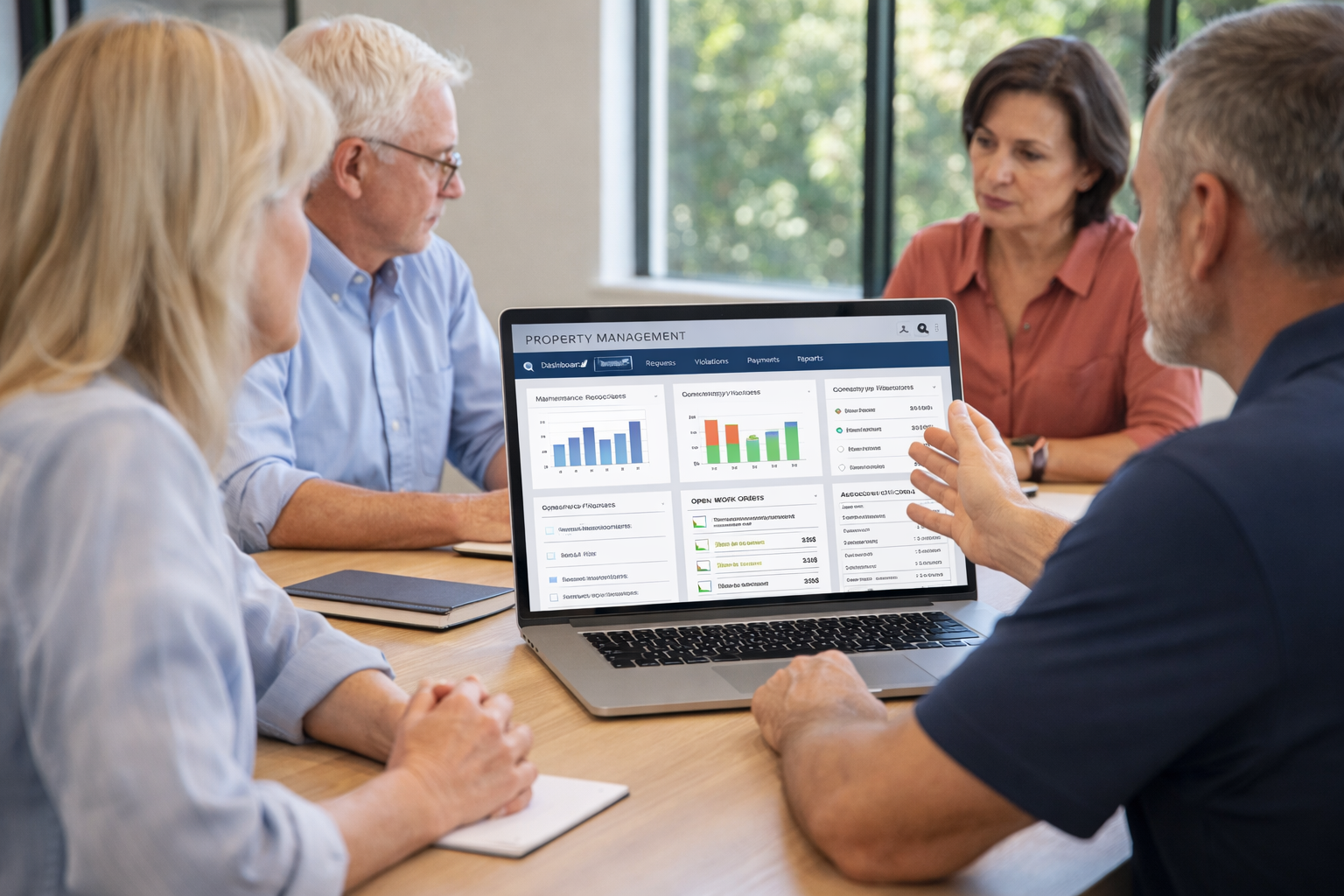
There is no single “best” property management software for every homeowners association (HOA) or condominium community. The right platform depends on the size of the association, the complexity of operations, and how boards and managers function day to day.
The key is choosing software that fits the community—not forcing the community to adapt to the software.
What Smaller HOAs and Condos Should Look For
For small to mid-sized communities, ease of use is often the most important factor. Boards benefit from platforms that simplify operations without requiring extensive training.
Key features to look for include:
Centralized document storage
Violation and work order tracking
Simple communication tools
Homeowner portals
Online payment capabilities
Modern platforms like Kaloop and similar HOA software solutions are designed to streamline these functions while keeping systems intuitive and accessible.
What Larger Communities Need
Larger or more complex associations often require more advanced functionality. These communities typically benefit from:
Robust accounting and financial reporting
Integration with banking and reserve planning
Compliance tracking tools
Enhanced data security
Scalability is critical. The software should grow with the community without creating confusion or operational silos.
Why Transparency and Continuity Matter
The best property management software does more than manage tasks—it preserves information. Board members and management companies change over time, but the system should maintain continuity.
A strong platform ensures:
Easy access to historical records
Organized communication logs
Clear financial tracking
Consistent operational workflows
This prevents information from being lost in emails, spreadsheets, or outdated systems.
The Bottom Line
The best property management software is not defined by the number of features—it is defined by how well it works for your community.
When software reduces friction, improves communication, and supports better decision-making, it becomes an essential tool rather than just another system.
When technology works quietly in the background, the entire community feels the benefit.
Popular in the Community
Property Management Software for HOAs and COAs: Streamlining Community Living (Part 1)
Written by Chris Abbott
May 19, 2026
Table of Contents
- Introduction
- Why HOAs and COAs Benefit from Property Management Software
- Vague or Incomplete Contracts
- Streamlined Communication
- Financial Management and Accounting
- Maintenance and Work Order Tracking
- Digital Document Management
Running a homeowners association (HOA) or condominium association (COA) is no small task. Boards and property managers must balance budgets, oversee maintenance schedules, enforce rules, communicate with residents, and remain compliant with state laws. As communities grow larger and regulations become more complex, the administrative workload can quickly become overwhelming.
That’s where property management software can make a significant difference.
These digital platforms are designed to streamline operations, improve transparency, and simplify daily tasks for both board members and residents.
Why HOAs and COAs Benefit from Property Management Software
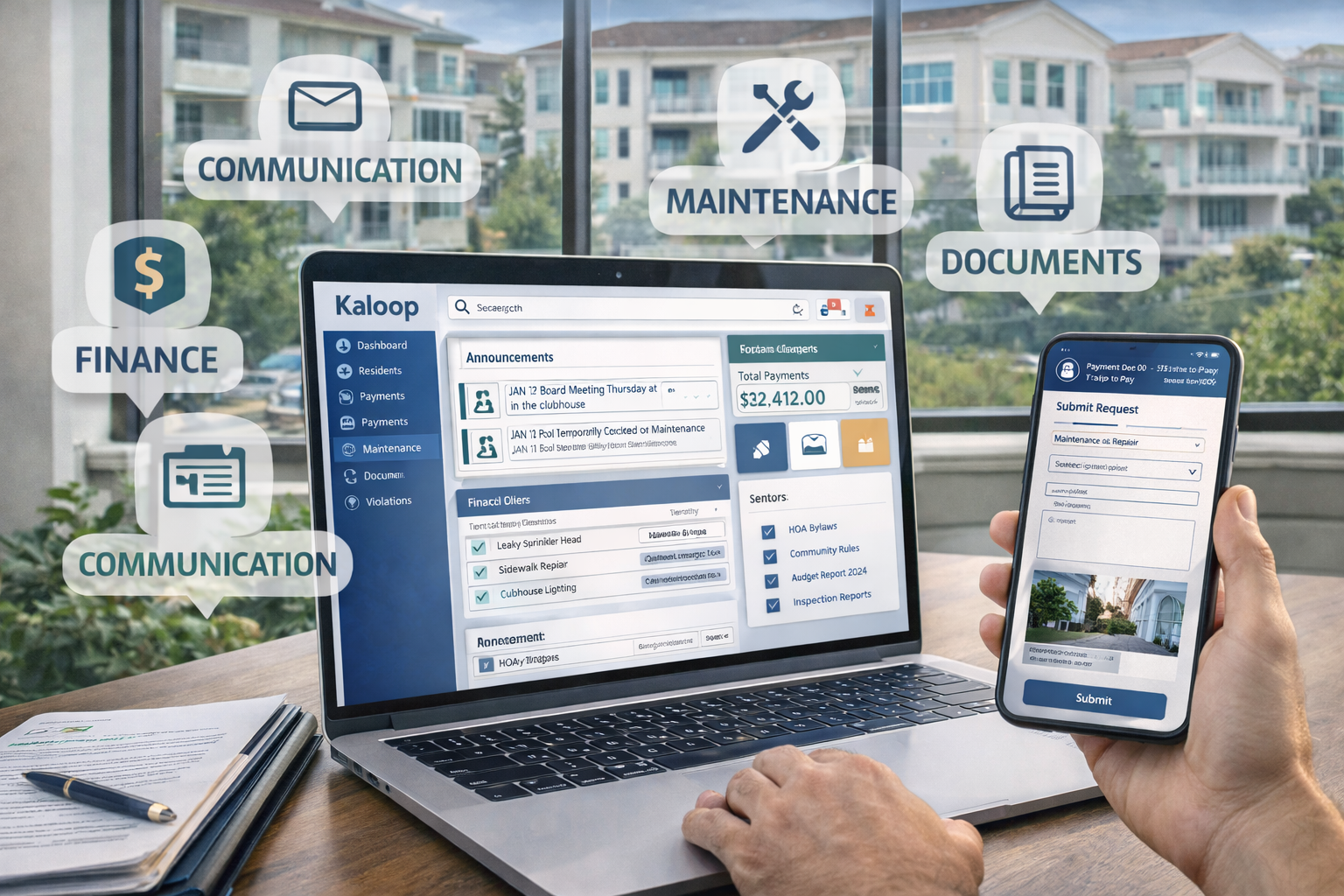
Modern property management software goes far beyond simple recordkeeping. Instead of managing spreadsheets, paper files, and separate communication tools, associations can centralize key functions within one platform.
Solutions such as Kaloop.com and other community management systems are designed to help boards and managers operate more efficiently while improving the experience for residents.
Some of the most valuable benefits include improved communication, financial management, maintenance tracking, and document organization.
Streamlined Communication
Effective communication is one of the biggest challenges for community associations. Property management platforms allow boards to send announcements, newsletters, meeting notices, and emergency alerts directly to residents.
Many systems also support two-way communication, allowing homeowners to submit questions, report concerns, or request services through the platform. This improves transparency while reducing the need for lengthy email chains.
Financial Management and Accounting
Financial oversight is one of the most critical responsibilities of an HOA or COA board. Property management software often includes built-in accounting tools that allow associations to track:
Assessments and payments
Delinquencies
Reserve funds
Financial reports and budgets
Automated invoicing and online payment options help reduce administrative workload while improving accuracy and cash flow.
Maintenance and Work Order Tracking
Maintaining common areas and building systems requires careful coordination. Software platforms allow boards and property managers to track maintenance requests, schedule recurring inspections, and assign work orders to vendors.
Having a centralized system ensures tasks are completed on time and creates a documented record for accountability.
Digital Document Management
Associations must maintain large volumes of records, including governing documents, contracts, meeting minutes, insurance policies, and inspection reports.
Property management platforms allow these documents to be stored securely and accessed when needed. Digital storage helps associations comply with recordkeeping requirements while making it easier to respond to owner requests.
Popular in the Community
Best Practices for HOA and Condo Websites and Owner Portals
Written by Chris Abbott
April 9, 2026
Table of Contents
- Introduction
- Prioritize Clear Organization and Easy Navigation
- Keep Content Accurate and Up to Date
- Maintain Strong Security and Privacy Controls
- Support Two-Way Interaction
- Strengthening the Community Through Technology
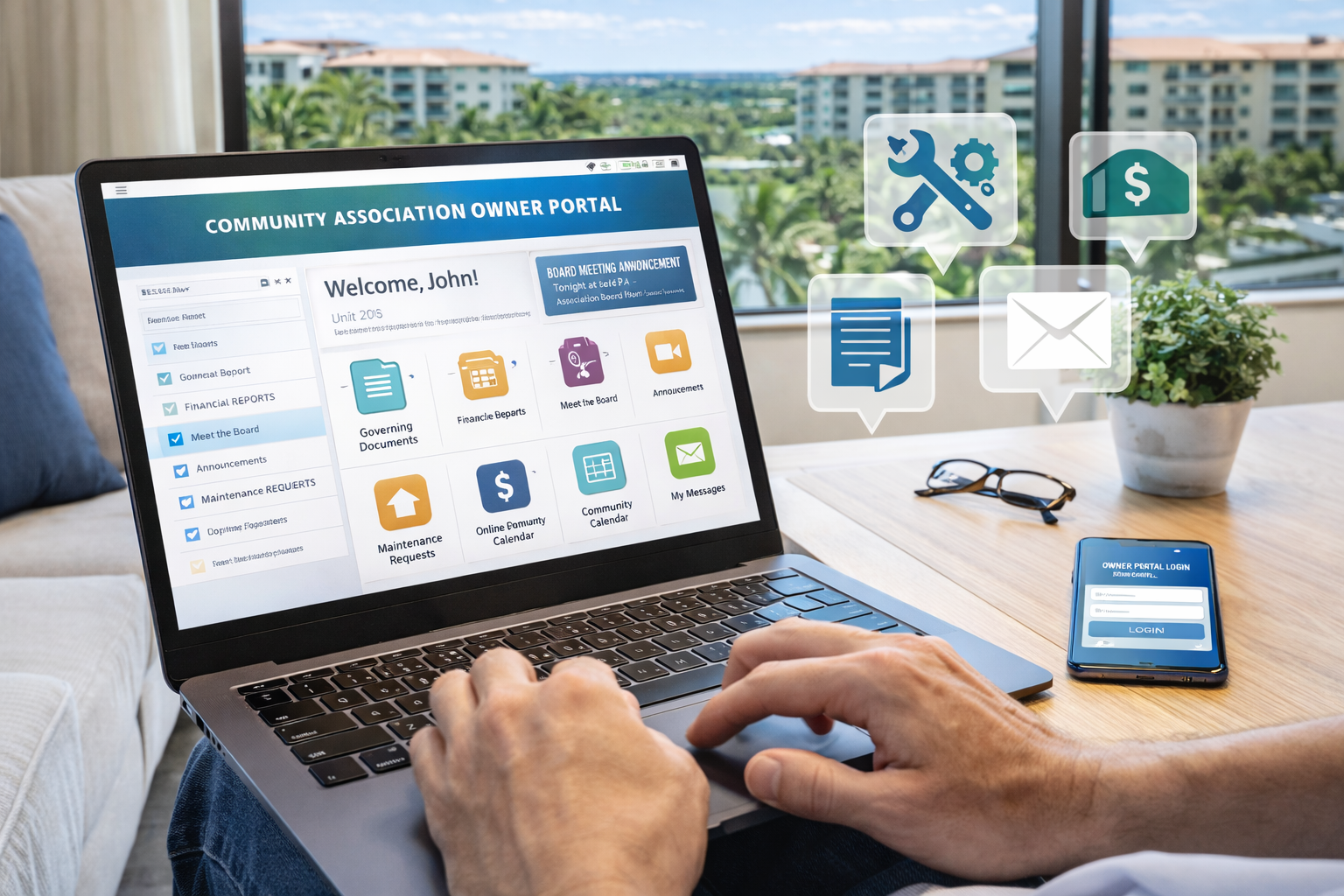
A well-designed HOA or condo association website is more than a convenience—it is a central communication hub that supports transparency, efficiency, and owner engagement. Associations that follow proven best practices create a smoother experience for boards, managers, and residents alike.
Prioritize Clear Organization and Easy Navigation
Owners should be able to quickly locate essential information without frustration. Key sections should include:
Governing documents (declarations, bylaws, rules)
Meeting agendas and approved minutes
Financial summaries and budgets
Maintenance updates
Contact information for management and the board
Cluttered layouts, broken links, or outdated pages undermine trust and reduce usability. A clean, structured design improves accessibility and encourages regular use.
Keep Content Accurate and Up to Date
Outdated documents or expired announcements create confusion and increase unnecessary inquiries. Assigning responsibility—whether to management or a designated board member—ensures content remains current.
Best practices include:
Posting timely updates after board meetings
Removing outdated notices
Updating financial summaries regularly
Clearly labeling document versions and dates
Consistency reinforces credibility and professionalism.
Maintain Strong Security and Privacy Controls
Owner portals often contain sensitive information, including financial data, account balances, or personal contact details. Secure logins, password protection, and role-based access controls are essential.
Associations must balance transparency with privacy obligations by restricting access to confidential records while still providing owners with appropriate information.
Regular software updates and secure hosting platforms further reduce cybersecurity risks.
Support Two-Way Interaction
Modern HOA and condo portals should do more than display information—they should facilitate engagement. Features such as:
Online maintenance request submissions
Digital document downloads
Automated assessment payment options
Community announcements
Secure messaging systems
Help streamline operations and reduce administrative workload.
Interactive tools improve response times and enhance overall efficiency.
Strengthening the Community Through Technology
When used effectively, HOA and condo websites and owner portals strengthen communication, support compliance, and improve owner satisfaction. A well-managed digital platform promotes transparency, reduces confusion, and creates a more connected, informed community.
Investing in a professional, secure, and organized online presence is no longer optional—it is a foundational component of modern association management.