Preventive Maintenance vs. Emergency Repairs: Why Proactive Planning Saves Condo & HOA Communities Money

Preventive Maintenance vs. Emergency Repairs

Written by Chris Abbott

May 5, 2026

Table of Contents

Share

Link copied to clipboard!

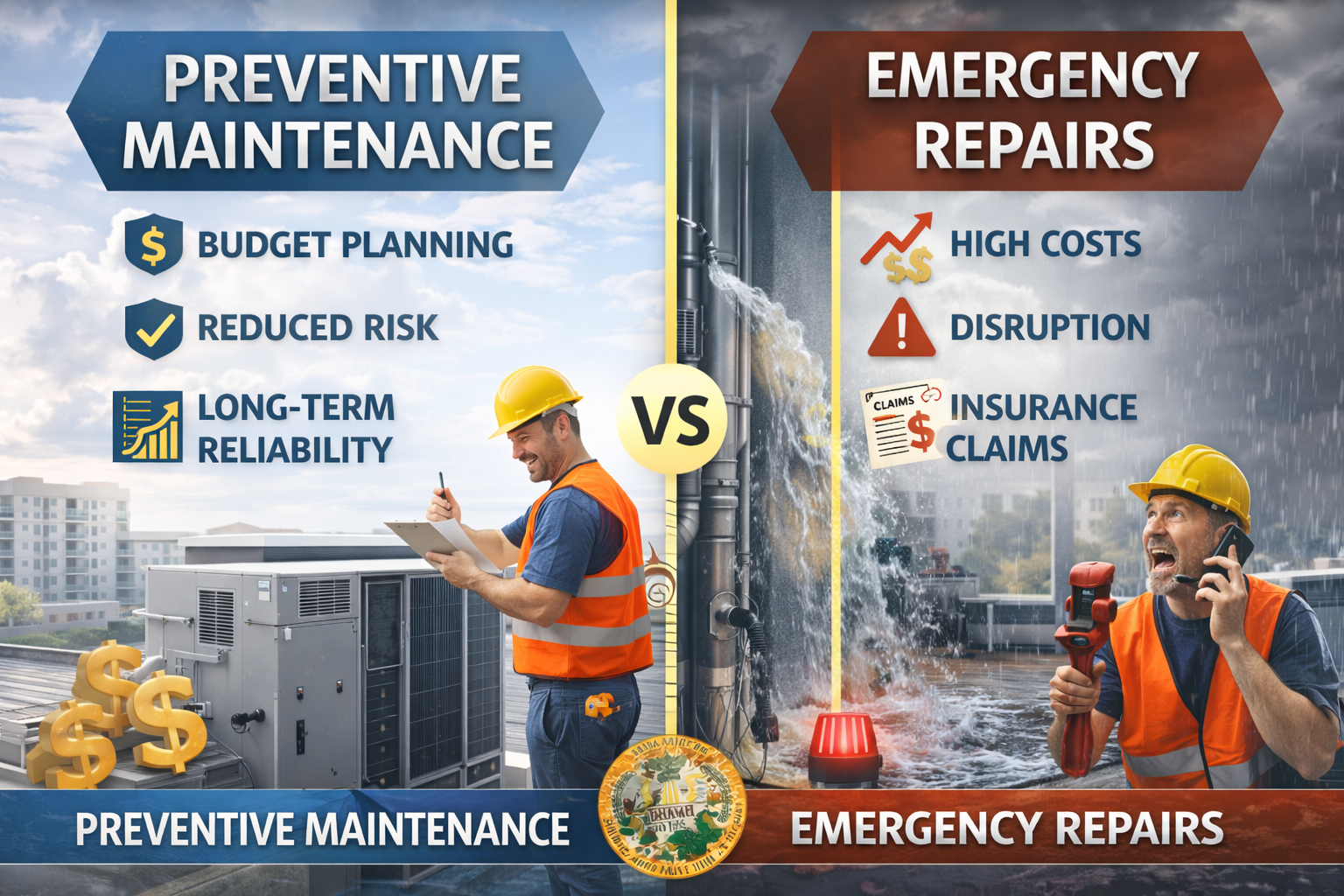
Preventive maintenance is a planned and proactive approach to caring for a condominium or HOA property. It focuses on regular inspections, routine servicing, and timely repairs designed to extend the life of building components. In contrast, emergency repairs occur when systems fail unexpectedly—often at the worst possible time.

While most associations understand the value of preventive maintenance, budget pressures or lack of long-term planning can push communities into a costly reactive cycle.

The High Cost of Emergency Repairs

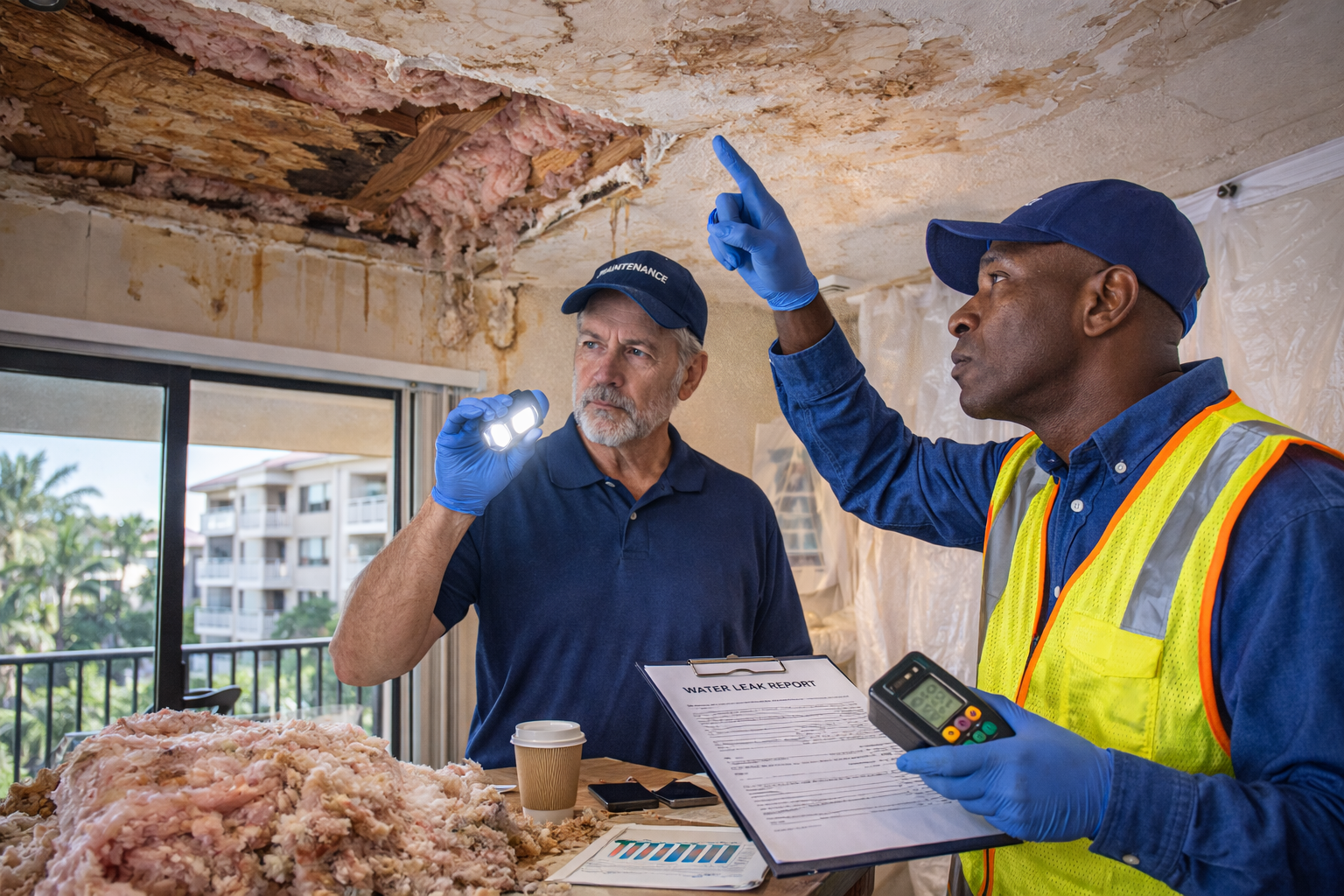
Emergency repairs almost always come with higher expenses. Contractors may be called in on short notice, overtime rates often apply, and temporary solutions may be required to protect life or property.

Unexpected repairs can result in:

  • Increased operating expenses

  • Special assessments

  • Disruption to residents

  • Insurance claims

  • Strained reserve funds

Delayed or incomplete emergency fixes may also lead to additional damage, increasing liability and long-term costs.

How Preventive Maintenance Reduces Risk

Preventive maintenance programs identify issues before they escalate. Regular inspections of roofs, plumbing, electrical systems, elevators, HVAC systems, and structural components allow associations to address wear and tear early—when repairs are simpler and more affordable.

A proactive approach helps associations:

  • Extend the life of major components

  • Reduce unexpected breakdowns

  • Improve budget predictability

  • Strengthen reserve planning

  • Avoid emergency contractor premiums

Planned maintenance costs are far easier to incorporate into annual budgets and long-term reserve studies than sudden emergency expenditures.

Financial and Insurance Benefits

Preventive maintenance also improves safety and reliability. Well-maintained systems are less likely to fail unexpectedly, reducing the risk of property damage or injury.

Insurers and lenders often view associations with strong maintenance practices more favorably. Demonstrating consistent upkeep can support:

  • More stable insurance coverage

  • Lower claim frequency

  • Stronger lender confidence

  • Improved property values

Neglected properties, on the other hand, may face higher premiums or underwriting scrutiny.

Building a More Resilient Community

Associations that prioritize preventive maintenance protect their physical assets, stabilize finances, and create a more predictable living environment for residents.

Over time, a proactive maintenance strategy results in fewer emergencies, lower long-term costs, and reduced conflict within the community.

Popular in the Community

ChatGPT Image Mar 10, 2026, 03_18_09 PM
AI in 2026: From Buzzword to Backbone
Explore how artificial intelligence in 2026 has evolved from a buzzword into an essential business tool,...
Learn more
ChatGPT Image Mar 10, 2026, 03_10_55 PM
Florida Cooperatives vs. Condominiums: Understanding Chapter 719 vs. Chapter 718
Learn the key differences between Florida cooperative and condominium laws under Chapters 719 and 718,...
Learn more
ChatGPT Image Mar 10, 2026, 02_51_07 PM
What’s New with Florida Statute Chapter 719? Updates for Cooperative Associations
Learn the latest developments in Florida Statute Chapter 719, the Florida Cooperative Act, including...
Learn more

Why Proper Documentation Matters for Condo and HOA Insurance Claims
Why Proper Documentation Matters for Condo and HOA Insurance Claims

Written by Chris Abbott

April 21, 2026

Table of Contents

Share

Link copied to clipboard!

Documentation is one of the most important factors in a successful insurance claim for condominium and HOA associations. Without clear, organized, and detailed records, even valid claims can be delayed, underpaid, or denied.

Strong documentation protects the association long before a loss occurs—and becomes critical immediately after damage happens.

Pre-Loss Documentation: Building a Strong Foundation

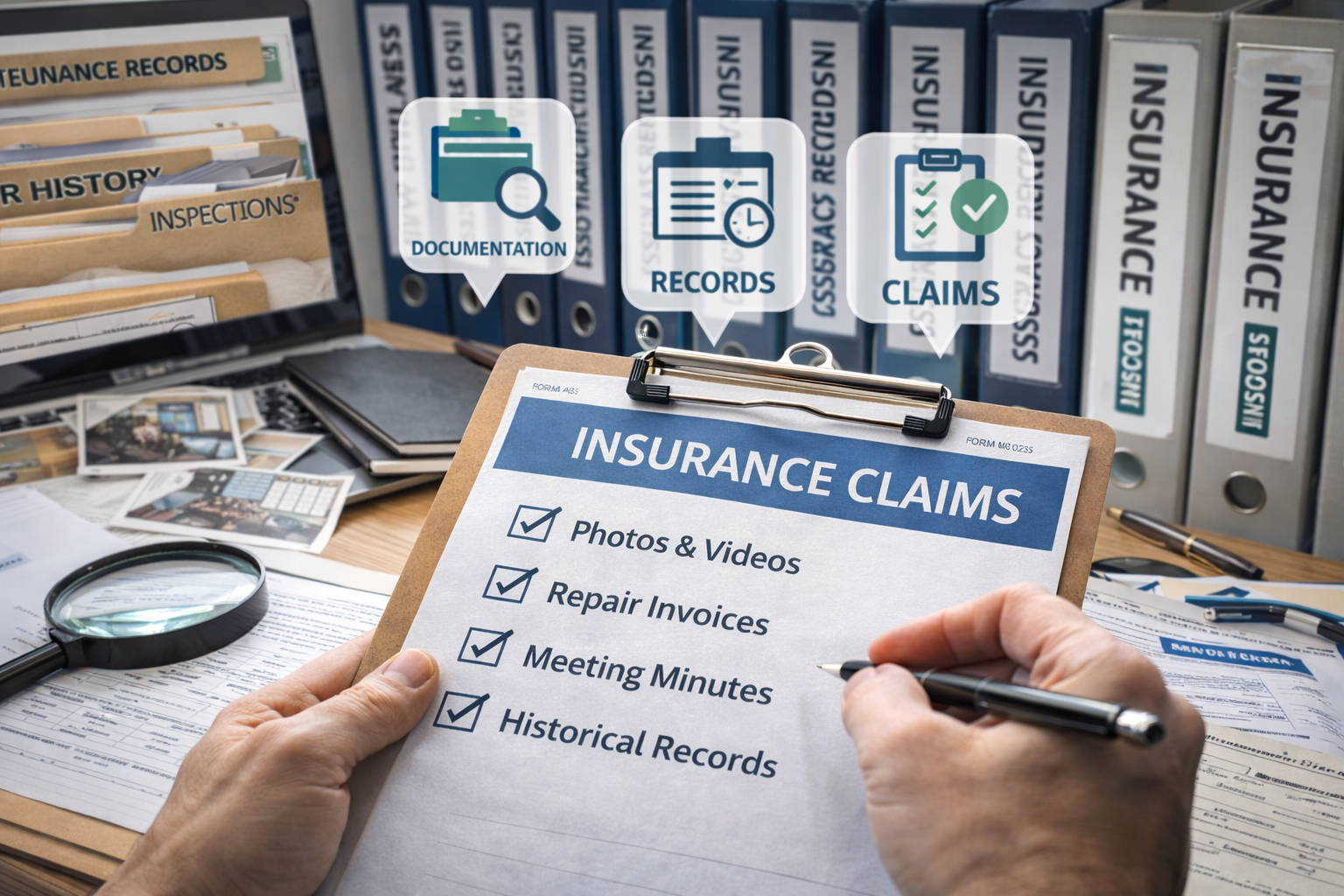
Before any loss event, associations should maintain well-organized records of:

  • Routine maintenance

  • Structural inspections

  • Repairs and upgrades

  • Vendor contracts

  • Warranty documentation

These records demonstrate that the property was properly maintained, which insurers often evaluate when determining claim eligibility and coverage. Inadequate maintenance documentation can lead to disputes about causation or pre-existing conditions.

Digital recordkeeping systems make it easier to store and retrieve this information when needed.

Post-Loss Documentation: Protecting the Claim

After a storm, fire, or water intrusion event, documentation becomes even more critical. Associations should immediately gather:

  • Clear photos and videos of all visible damage

  • Written incident reports with dates and times

  • Emergency repair invoices

  • Vendor estimates and contracts

  • Copies of all communications with insurers and adjusters

Incomplete or inconsistent documentation can raise red flags and slow the claims process. Thorough records strengthen the association’s position during inspections and negotiations.

Historical Records and Board Decisions Matter

Meeting minutes and board resolutions may also become relevant during a claim. Insurers frequently request historical documentation to determine whether damage relates to prior repairs, deferred maintenance, or known issues.

Accurate minutes and documented decisions demonstrate that the board acted responsibly and fulfilled its fiduciary duties.

Documentation as Risk Management

Proper documentation protects the association not only during insurance claims but also in disputes. Clear records support the board’s position if coverage determinations are challenged or if owners question how a claim was handled.

Investing in organized recordkeeping systems is not merely administrative—it is a critical component of risk management.

When claims arise, associations with complete, accurate documentation are better positioned to secure fair settlements, minimize delays, and protect the financial stability of the community.

Popular in the Community

ChatGPT Image Mar 10, 2026, 03_18_09 PM
AI in 2026: From Buzzword to Backbone
Explore how artificial intelligence in 2026 has evolved from a buzzword into an essential business tool,...
Learn more
ChatGPT Image Mar 10, 2026, 03_10_55 PM
Florida Cooperatives vs. Condominiums: Understanding Chapter 719 vs. Chapter 718
Learn the key differences between Florida cooperative and condominium laws under Chapters 719 and 718,...
Learn more
ChatGPT Image Mar 10, 2026, 02_51_07 PM
What’s New with Florida Statute Chapter 719? Updates for Cooperative Associations
Learn the latest developments in Florida Statute Chapter 719, the Florida Cooperative Act, including...
Learn more