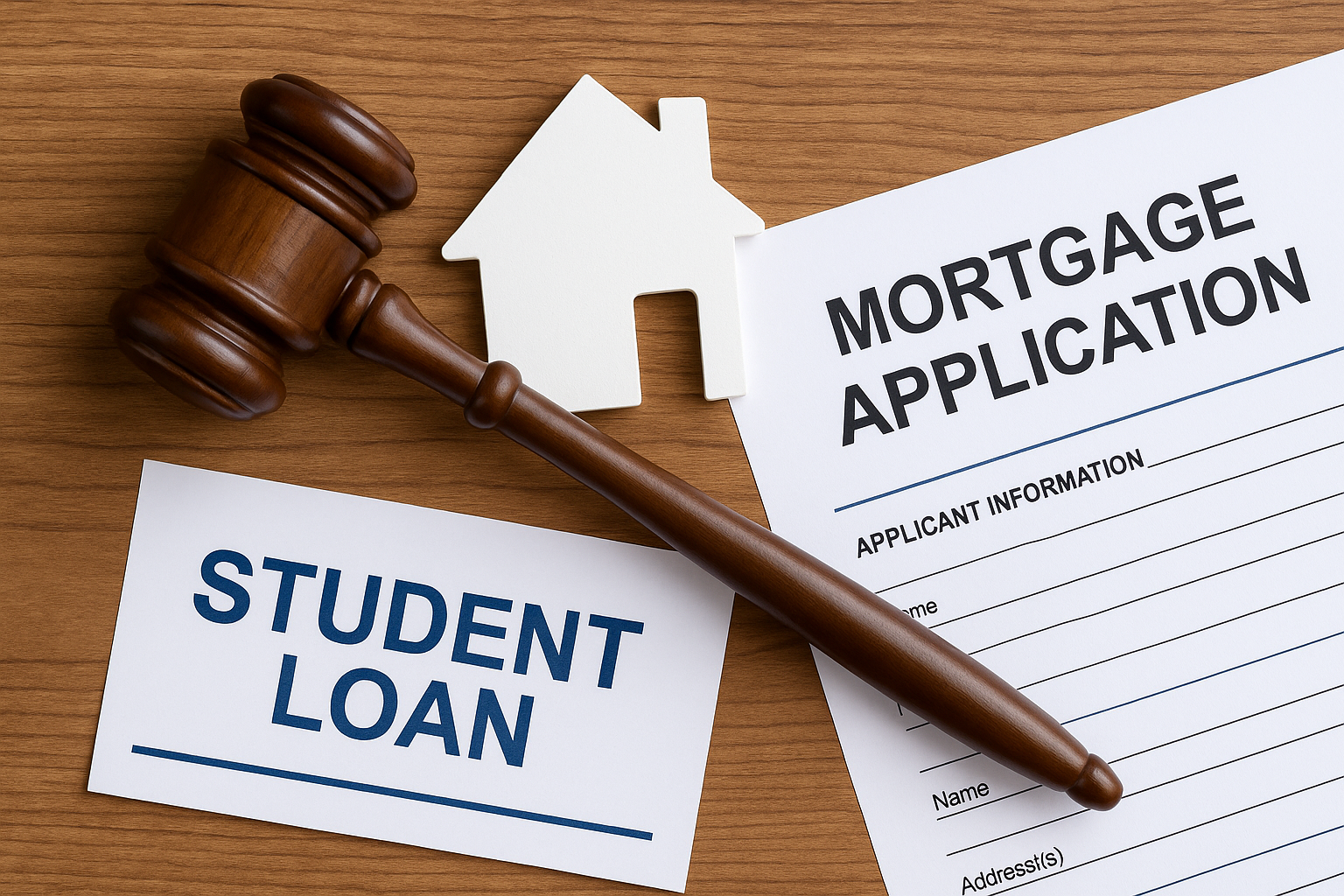
Student Loans and Mortgages: How to Make Both Work for You

Written by Heidi Hensell

December 16, 2025

Table of Contents

Share

Link copied to clipboard!

For many prospective homeowners, student loan debt plays a significant role in the mortgage process. With the rising cost of education, millions of Americans carry student loans—making credit scores, debt-to-income ratios (DTI), and mortgage eligibility key considerations. Understanding how student debt impacts homeownership and implementing smart strategies can help buyers make their homeownership dreams a reality.

How Student Debt Affects Mortgage Qualification

Mortgage lenders focus heavily on the debt-to-income (DTI) ratio—monthly debt payments compared to gross income. High student loan payments raise DTI, potentially limiting mortgage size or approval.

Credit scores are equally crucial. Student loans themselves don’t harm your score, but late or missed payments certainly can. Lenders also assess credit history length, credit mix, and recent inquiries, which all influence approval odds and interest rates.

Strategies for Managing Student Debt Before Buying a Home

Understand Your Loan Details
Know your loan types, interest rates, repayment plans, and monthly requirements. Federal loans offer flexibility through income‑driven plans, while private loans often come with fewer options—so understanding your terms is essential.

Pay Down Debt Strategically
It may not be feasible to eliminate student loans entirely before homebuying, but reducing high-interest debt helps lower your DTI and improves buying power. Even making small extra payments can yield gains over time.

Consider Refinancing
Refinancing may lower your monthly payments or interest rate, freeing up income for mortgage qualification. Be cautious, though—refinancing federal loans into private ones may eliminate certain borrower protections.

Save for a Larger Down Payment
A strong down payment reduces the loan amount needed and potentially secures better interest rates—improving affordability and offsetting the impact of student debt.

Work with a Knowledgeable Lender
Lenders familiar with student loan repayment options can evaluate your DTI more favorably. Some may accept income-driven repayment plans at reduced effective monthly payments, improving eligibility.

Long-Term Considerations

Balancing student debt with homeownership requires strategic planning. Homeownership comes with long-term financial commitments—mortgage payments, taxes, insurance, and maintenance. Ensuring your student loans remain manageable alongside these costs is essential to prevent financial stress.

Conclusion

Student debt doesn’t have to stand in the way of homeownership, but it does require careful planning. Understanding your loans, managing payment strategies, saving aggressively, and partnering with informed lenders can help you navigate the mortgage process successfully. With the right approach, it’s possible to turn student debt into a stepping-stone toward achieving your goal of owning a home.

Popular in the Community

IMG_6362
BBQ Pits and “Public” Bathrooms in COAs: Balancing Fun and Responsibility
Ensure your Florida condominium or co‑op stays compliant: learn when milestone inspections are due, what...
Learn more
IMG_6362
Before You Buy in Florida — Why You Should Read the Governing Documents First
Ensure your Florida condominium or co‑op stays compliant: learn when milestone inspections are due, what...
Learn more
IMG_6362
Condo Insurance vs. Homeowners Insurance in Florida Communities: What COA and HOA Residents Should Know
Ensure your Florida condominium or co‑op stays compliant: learn when milestone inspections are due, what...
Learn more