Copyright © Kaloop 2025 All Right Reserved
Written by Chris Abbott
May 19, 2026
Running a homeowners association (HOA) or condominium association (COA) is no small task. Boards and property managers must balance budgets, oversee maintenance schedules, enforce rules, communicate with residents, and remain compliant with state laws. As communities grow larger and regulations become more complex, the administrative workload can quickly become overwhelming.
That’s where property management software can make a significant difference.
These digital platforms are designed to streamline operations, improve transparency, and simplify daily tasks for both board members and residents.
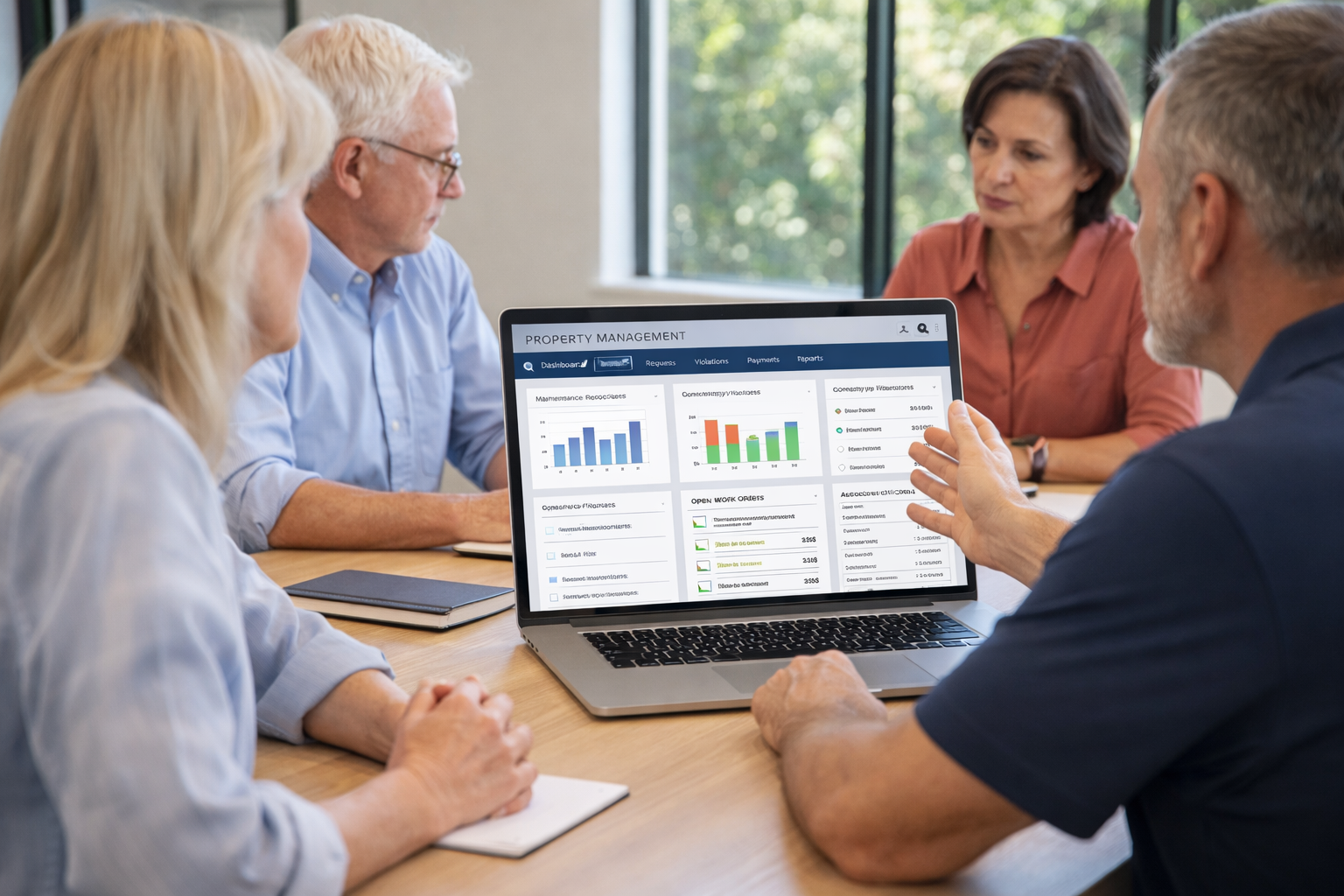
Modern property management software goes far beyond simple recordkeeping. Instead of managing spreadsheets, paper files, and separate communication tools, associations can centralize key functions within one platform.
Solutions such as Kaloop.com and other community management systems are designed to help boards and managers operate more efficiently while improving the experience for residents.
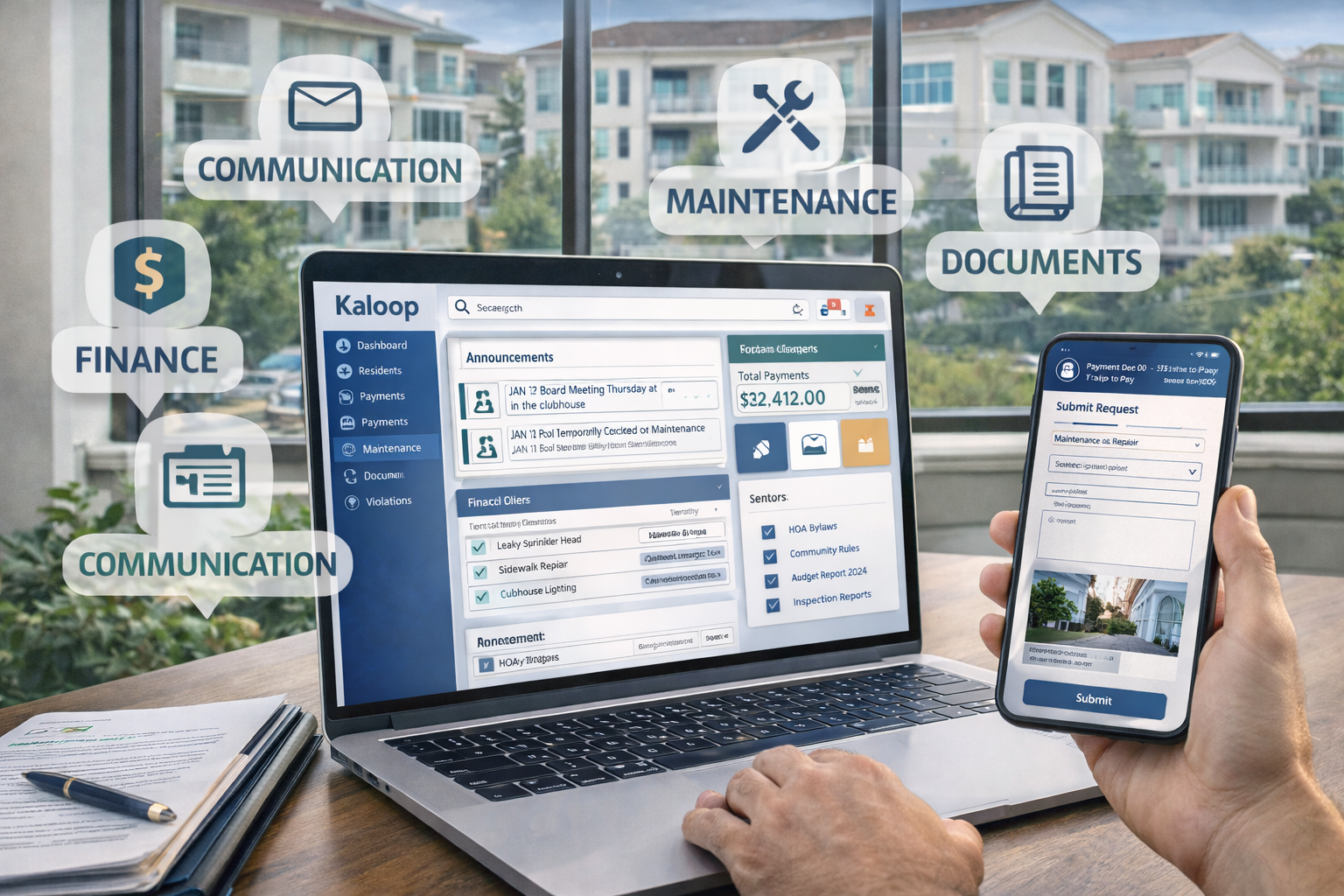
Some of the most valuable benefits include improved communication, financial management, maintenance tracking, and document organization.
Effective communication is one of the biggest challenges for community associations. Property management platforms allow boards to send announcements, newsletters, meeting notices, and emergency alerts directly to residents.
Many systems also support two-way communication, allowing homeowners to submit questions, report concerns, or request services through the platform. This improves transparency while reducing the need for lengthy email chains.
Financial oversight is one of the most critical responsibilities of an HOA or COA board. Property management software often includes built-in accounting tools that allow associations to track:
Assessments and payments
Delinquencies
Reserve funds
Financial reports and budgets
Automated invoicing and online payment options help reduce administrative workload while improving accuracy and cash flow.
Maintaining common areas and building systems requires careful coordination. Software platforms allow boards and property managers to track maintenance requests, schedule recurring inspections, and assign work orders to vendors.
Having a centralized system ensures tasks are completed on time and creates a documented record for accountability.
Associations must maintain large volumes of records, including governing documents, contracts, meeting minutes, insurance policies, and inspection reports.
Property management platforms allow these documents to be stored securely and accessed when needed. Digital storage helps associations comply with recordkeeping requirements while making it easier to respond to owner requests.