Copyright © Kaloop 2025 All Right Reserved
Written by Chris Abbott
July 2, 2026
Door lintels are rarely noticed because they are usually hidden behind stucco, concrete, or brick. Yet they play one of the most important structural roles in any condominium or HOA building. A lintel sits directly above doors and windows, carrying the weight of the wall above the opening.
Without that support beam, the weight of the building would press directly down on the door frame.
A lintel is typically made from steel, reinforced concrete, or masonry. Its job is simple but critical: distribute the structural load around the door or window opening.
When lintels begin to weaken or fail, buildings often show early warning signs such as:
Cracks forming above doors or windows
Doors that begin sticking or jamming
Separation in stucco or masonry
Water intrusion near the opening
While these issues may appear cosmetic at first, they often indicate structural stress.
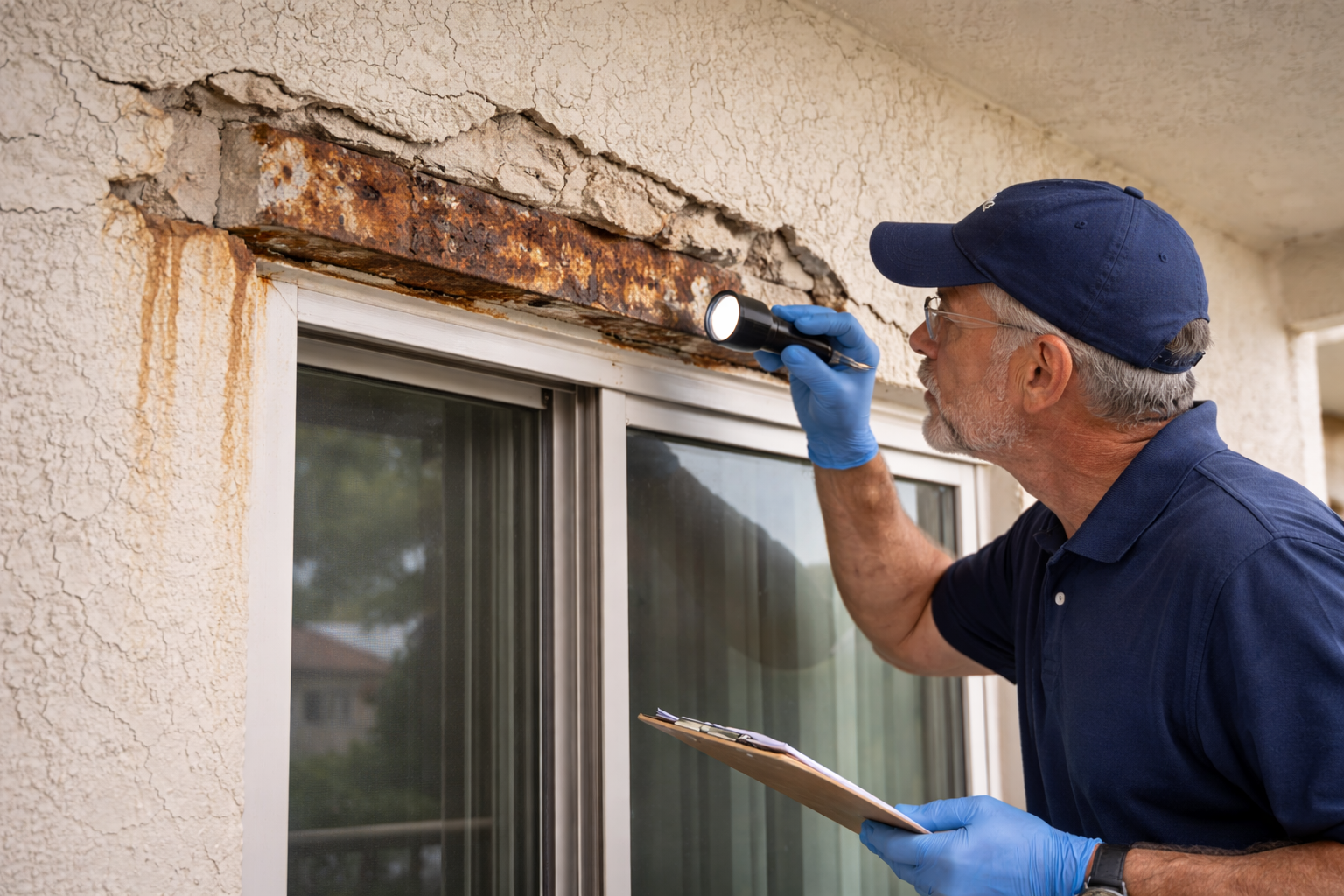
Florida’s climate can accelerate lintel deterioration. Heat, humidity, salt air, and moisture exposure can cause steel lintels to corrode and expand.
When steel rusts, it expands, placing pressure on the surrounding concrete or stucco. This expansion can cause visible cracking and allow water to enter the building envelope.
Over time, that moisture can lead to more corrosion, worsening the damage.
Some owners assume cracks above doors are minor cosmetic issues. In many cases, they are actually early signs of structural lintel deterioration.
Ignoring the problem allows rust, water intrusion, and structural stress to spread.
What begins as a small repair can eventually become a much larger wall reconstruction project if the lintel fails completely.
Lintels are rarely seen, but they are essential structural components that quietly support every doorway and window in a building.
For HOA boards and condominium associations, regular inspections and prompt repairs help prevent small structural issues from turning into major building problems.
Improved package delivery options
Better security and locking systems
Compliance with modern postal standards
Reduced risk of mail theft