Copyright © Kaloop 2025 All Right Reserved

Written by Heidi Hensell
December 17, 2025
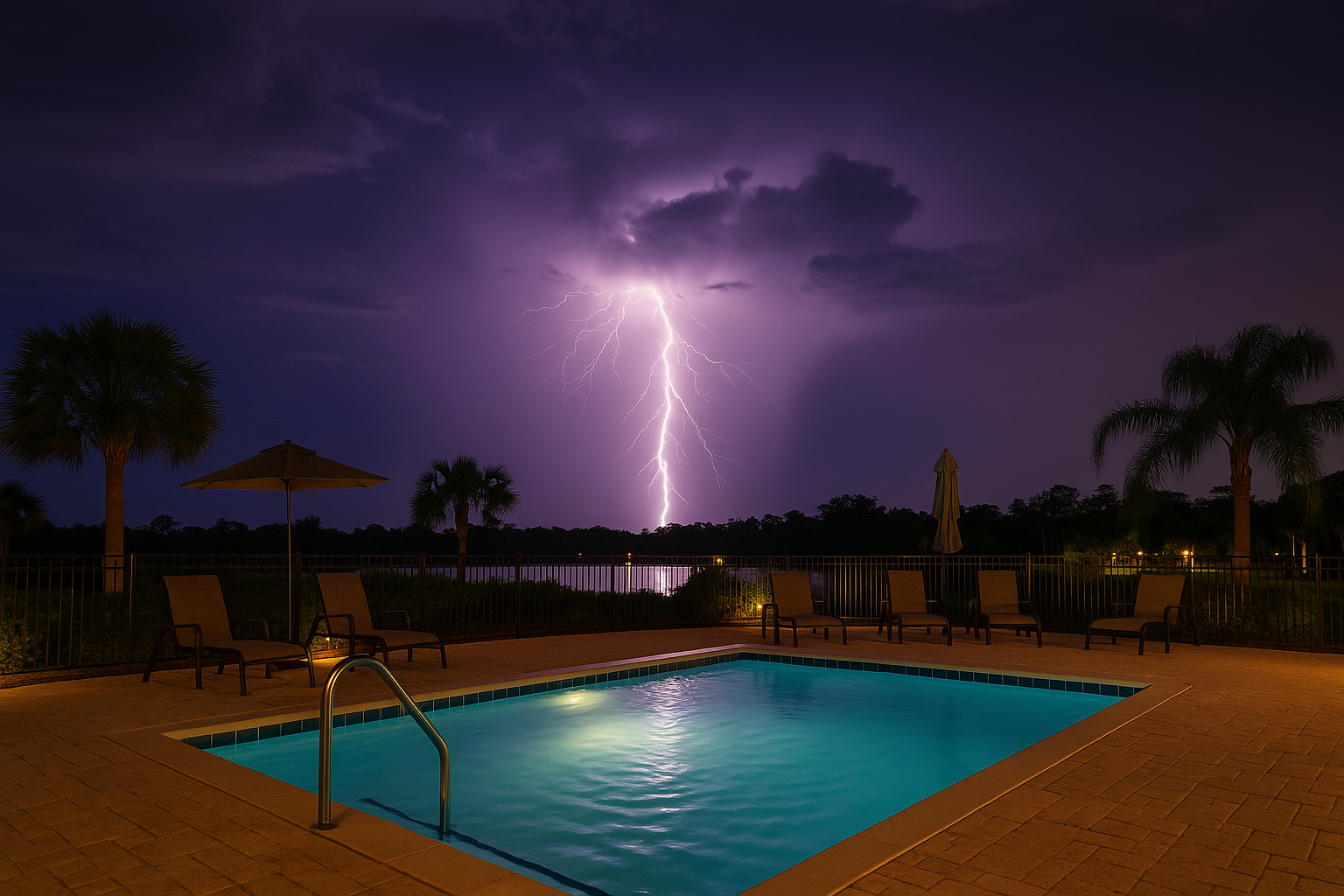
Florida is famous (or infamous) for its heavy lightning activity—earning the title “Lightning Capital of the U.S.” Each year, thousands of strikes occur, especially in the summer months. For community associations, this isn’t just a weather issue—it’s a matter of safety, risk management, and legal obligation.
A lightning alert system is a technology that detects nearby lightning or electrical storms and provides real‑time warnings through sirens, warning lights, strobe lights, horn blasts, or app/phone notifications. These systems are often installed to protect high‑use outdoor common areas such as:
Swimming pools
Playgrounds and splash pads
Tennis courts, basketball courts, and sports fields
Outdoor event spaces, gazebos, patios
Outdoor areas are frequent gathering points, especially during warm, Florida weather. When a lightning alert system gives advance warning, residents, staff, and guests have time to move indoors safely. These systems are critical in preventing injuries caused by surprise storms.
In case of an accident, storm damage, or injury due to a lightning strike, a properly installed alert system can serve as evidence that the community association took reasonable precautions. Without one, the association could face legal challenges for failing to warn or protect.
Many HOAs already have rules about closing pools or recreational areas during storms—but relying on staff to monitor weather manually can be inconsistent. An automated alert system allows for uniform, data‑driven enforcement of closures or evacuations based on actual lightning risk.
Because storms in Florida often develop quickly, manual weather observation is not enough. Real‑time lightning detection and alert systems are more reliable, triggering safety warnings even when the storm is not yet visible. Many Florida parks and recreation departments use systems that issue horn blasts, strobe lights, or both when lightning is detected within a certain radius (for example, 10 miles) to alert people to seek shelter.
Detection radius & speed: Systems should sense in‑cloud and cloud‑to‑ground lightning and issue alerts with enough lead time.
Alert methods: Use multiple channels (audible horns, lights, mobile app alerts) so that everyone in the area is warned.
Policy & procedure: Define what triggers closure of amenities, how staff respond, where shelter is located, and when it’s safe to resume activities.
Maintenance & testing: Routine checks of sensors, sounds, and lights so the system works when it counts.
Local rules & codes: Ensure your system meets local Florida regulations for parks or recreation areas.
Investing in a reliable lightning alert system is more than just an enhancement—it’s a necessary measure for Florida community associations. It supports safety, reduces legal risk, and helps associations manage their outdoor amenities responsibly. By combining technology with policy, training, and communication, boards can show residents that safety is a priority—even when storms roll in unexpectedly.