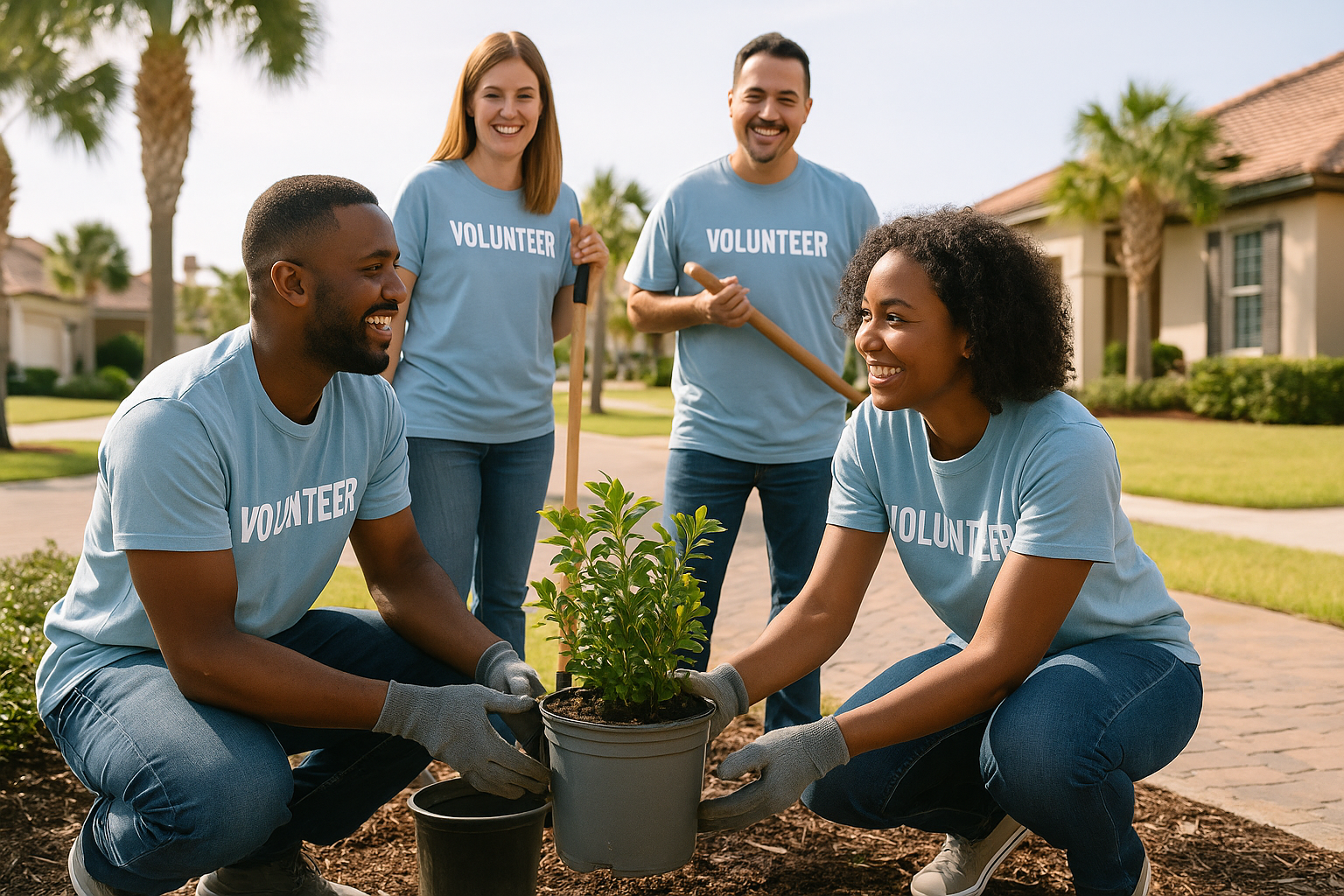
HOA Volunteers: Building Stronger, Connected, and Thriving Communities

Written by Heidi Hensell

February 6, 2026

Table of Contents

Share

Link copied to clipboard!

In every successful homeowners’ association (HOA), community volunteers are the heartbeat that keeps neighborhoods thriving. Their dedication strengthens connections among neighbors, supports boards and managers, and creates a more engaged, welcoming environment.

From organizing social events and holiday celebrations to serving on committees and assisting with community projects, volunteers provide a personal touch that professional management alone cannot replicate.

Why Volunteers Matter in HOA Communities

1. Reduce Operational Costs
Volunteers assist with tasks that might otherwise require paid services, from event planning to beautification projects. Their efforts save associations money while enhancing services.

2. Encourage Resident Involvement
As ambassadors, volunteers help engage their neighbors, promoting trust, transparency, and collaboration. Higher participation translates to stronger community pride.

3. Improve Communication
Volunteers often act as liaisons between residents and the board, sharing feedback and helping ensure community needs are understood and addressed.

4. Enhance Quality of Life
Whether planning social gatherings or maintaining common spaces, volunteers directly contribute to a more enjoyable and connected living environment.

Best Practices for HOA Volunteer Programs

  1. Clear Communication and Defined Roles
    Residents are more likely to step up when they understand how they can help. Offering specific opportunities—such as joining a welcome committee, supporting landscaping projects, or leading a holiday event—makes participation simple and approachable.
  2. Provide Training and Resources
    Equipping volunteers with tools and guidance ensures they feel confident and effective in their roles, leading to more consistent results.
  3. Recognize Contributions
    Recognition fuels motivation. Thank-you notes, shout-outs in newsletters, or small appreciation events help volunteers feel valued and encourage others to join.
  4. Foster a Culture of Service
    Highlighting the impact of volunteerism inspires more residents to get involved, creating a cycle of engagement that benefits the entire community.

Volunteers: The Heartbeat of HOAs

Community volunteers are more than helpers—they’re the foundation of thriving HOAs. By giving their time, energy, and creativity, they drive engagement, reduce costs, and foster pride in the neighborhood. For boards and managers, cultivating a strong volunteer program is one of the most effective ways to build a resilient, connected, and truly successful community.

Popular in the Community

Noise complaint Annoyed woman blocking ears with pillows on a couch
Noise Compliance in Florida COAs and HOAs: What Residents Should Know
Learn how noise compliance works in Florida HOAs and COAs, including quiet hours, local ordinances, and...

Learn more
Friends socializing and enjoying a backyard BBQ, grilling food at a summer cookout
BBQ Pits and “Public” Bathrooms in COAs: Balancing Fun and Responsibility
BBQ pits and public bathrooms can enhance COA living. Learn how rules, maintenance, and shared responsibility...

Learn more
AdobeStock_1873297514 (1)
Before You Buy in Florida — Why You Should Read the Governing Documents First
Buying in a Florida HOA or COA? Learn why reviewing governing documents, fees, leasing rules, and restrictions...
Learn more