Copyright © Kaloop 2025 All Right Reserved
Written by Chris Abbott
March 31, 2026
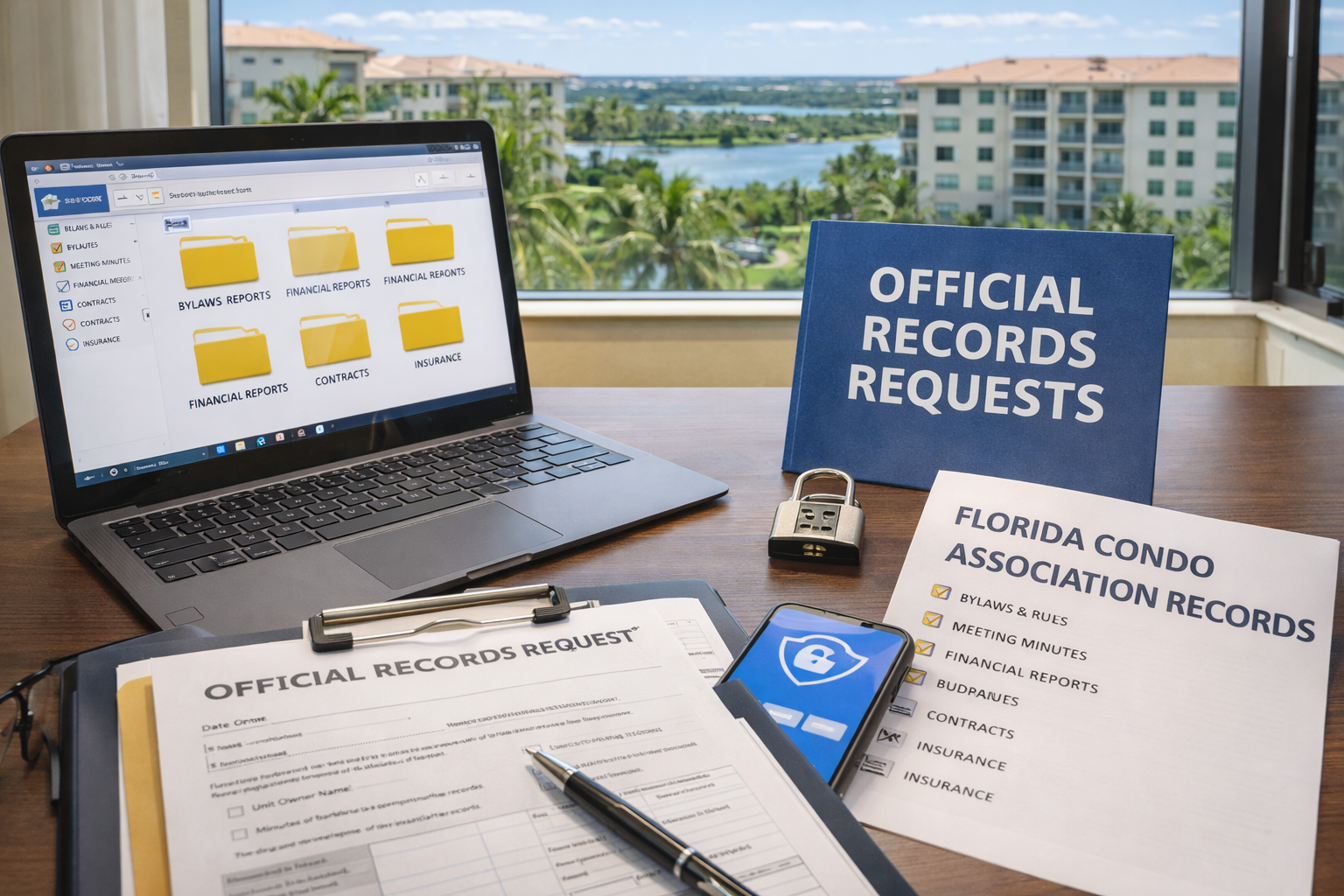
Official records are a cornerstone of transparency and accountability in condominium associations. Florida law grants unit owners the right to inspect and copy specific association records, making organized recordkeeping essential for legal compliance and community trust.
As technology evolves, many Florida condo associations are transitioning from paper files to secure digital recordkeeping systems to meet these obligations more efficiently.
Official records generally include documents that reflect the governance and operations of the association, such as:
Governing documents (declaration, bylaws, rules and regulations)
Financial statements and annual budgets
Contracts and vendor agreements
Meeting agendas and minutes
Insurance policies
Reserve studies and reports
Board resolutions and official correspondence
Historically, maintaining these records required physical storage, manual copying, and in-person inspections. This process was time-consuming and often administratively burdensome for boards and property managers.
Digital record systems have transformed how associations manage and provide access to official records.
Key benefits include:
Secure, searchable document storage
Faster response times to records requests
Reduced risk of lost or misplaced files
Lower administrative and copying costs
Improved organization and version control
For owners, digital records mean quicker and more convenient access to information. For boards and managers, it means streamlined operations and better compliance with statutory timelines.
Many associations now use secure online portals that allow owners to access commonly requested documents without submitting formal inspection requests.
While digital recordkeeping offers significant advantages, it also requires careful oversight. Associations must ensure that all records are:
Complete and accurate
Properly categorized
Retained in accordance with legal requirements
Protected through appropriate access controls
Not all documents are subject to inspection. Certain records—such as privileged legal communications, personnel files, or personal identifying information—may be exempt. Clear internal policies help prevent accidental disclosures and reduce liability risks.
Data security measures, including password protection, user permissions, and encrypted storage, are essential to safeguard sensitive information.
When an official records request is submitted, associations should follow a standardized process to avoid misunderstandings or disputes.
Best practices include:
Promptly acknowledging receipt of the request
Clarifying which records will be provided
Offering reasonable access methods (digital or in-person)
Maintaining documentation of the request and response
Consistent procedures promote transparency while protecting the association’s legal interests.
Properly managed digital records strengthen transparency and reinforce owner confidence. Associations that invest in organized, secure digital systems are better equipped to meet legal requirements, respond efficiently to owner inquiries, and reduce administrative strain.
As technology continues to evolve, proactive digital record management is no longer optional—it is a strategic advantage for Florida condominium associations committed to accountability and long-term stability.