Copyright © Kaloop 2025 All Right Reserved
Written by Chris Abbott
July 14, 2026
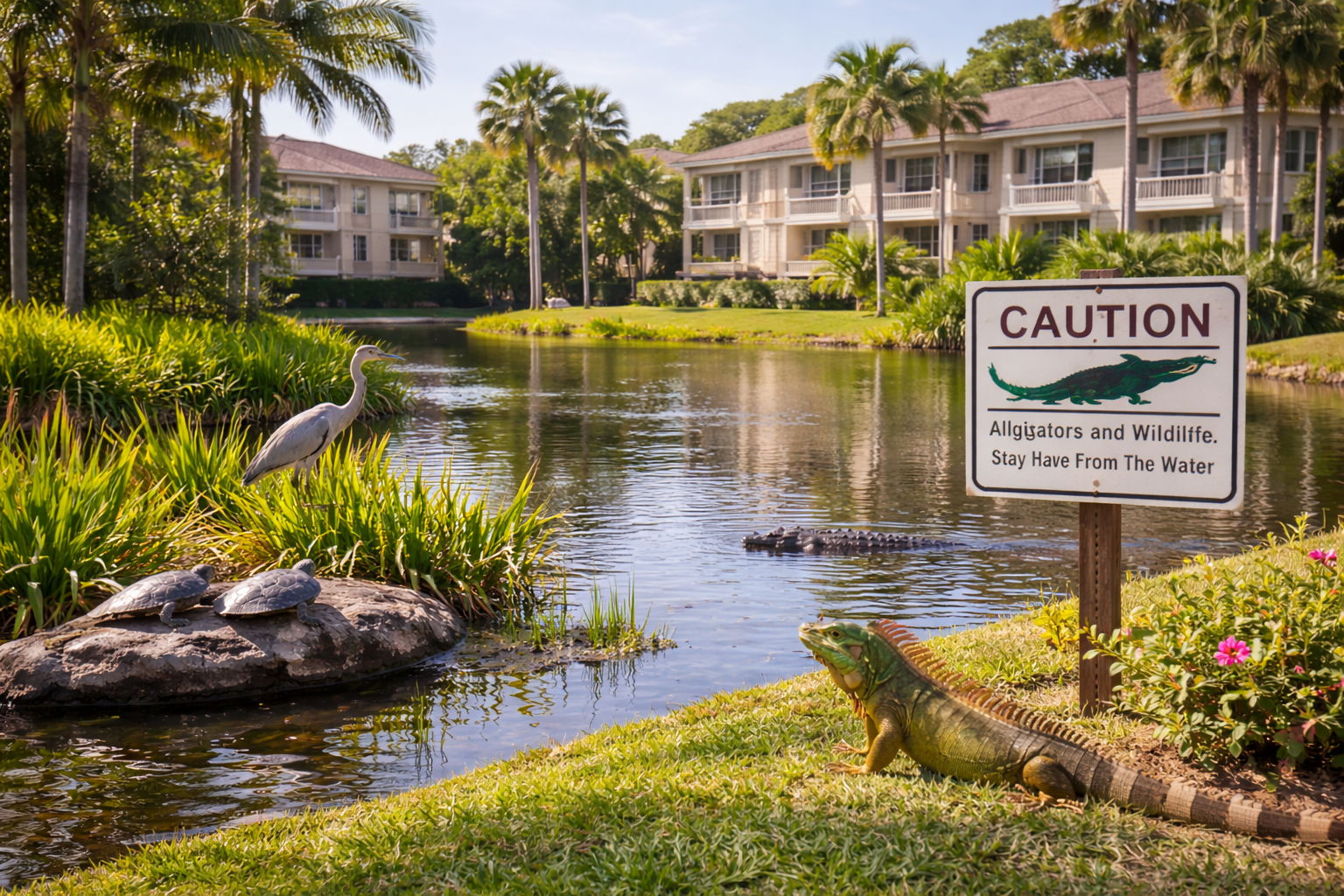
Living in a Florida HOA or condominium community often means sharing more than just sidewalks and common areas. It also means sharing space with some of the most unique wildlife in the country. From turtles and herons to raccoons, iguanas, and the occasional alligator, nature does not stop at the community gate.
Many of these animals are not simply passing through. They are part of Florida’s natural ecosystem and often live permanently in nearby ponds, wetlands, and wooded areas within or around communities.
Many Florida wildlife species are protected by state or federal law. This means HOAs and residents cannot remove, relocate, or disturb them without proper authorization.
Because of this, associations must be cautious when:
Landscaping near ponds or wetlands
Trimming trees that may contain bird nests
Clearing vegetation around natural habitats
What might look like overgrown landscaping could actually be essential habitat for protected birds, turtles, or other wildlife species.
While wildlife adds beauty to Florida communities, it can also create challenges. Certain animals may cause property damage or safety concerns.
Common issues include:
Burrowing animals damaging sidewalks or seawalls
Birds nesting in gutters or roof vents
Iguanas damaging landscaping
Alligators appearing in retention ponds
When situations like these arise, associations should contact licensed wildlife professionals. Attempting to handle wildlife without proper training can be dangerous and may violate Florida wildlife protection laws.
HOAs can take proactive steps to minimize wildlife problems while still respecting natural habitats.
Helpful strategies include:
Securing trash and food sources
Posting wildlife awareness signs near ponds
Educating residents about safe wildlife interactions
Maintaining landscaping that discourages nuisance animals
Florida communities are not separate from the environment—they are part of it. When HOA boards and residents understand how to coexist with wildlife responsibly, they reduce safety risks and protect the natural beauty that makes Florida unique.
In the end, living in Florida means living in an ecosystem—and when humans and wildlife share it wisely, everyone benefits.